
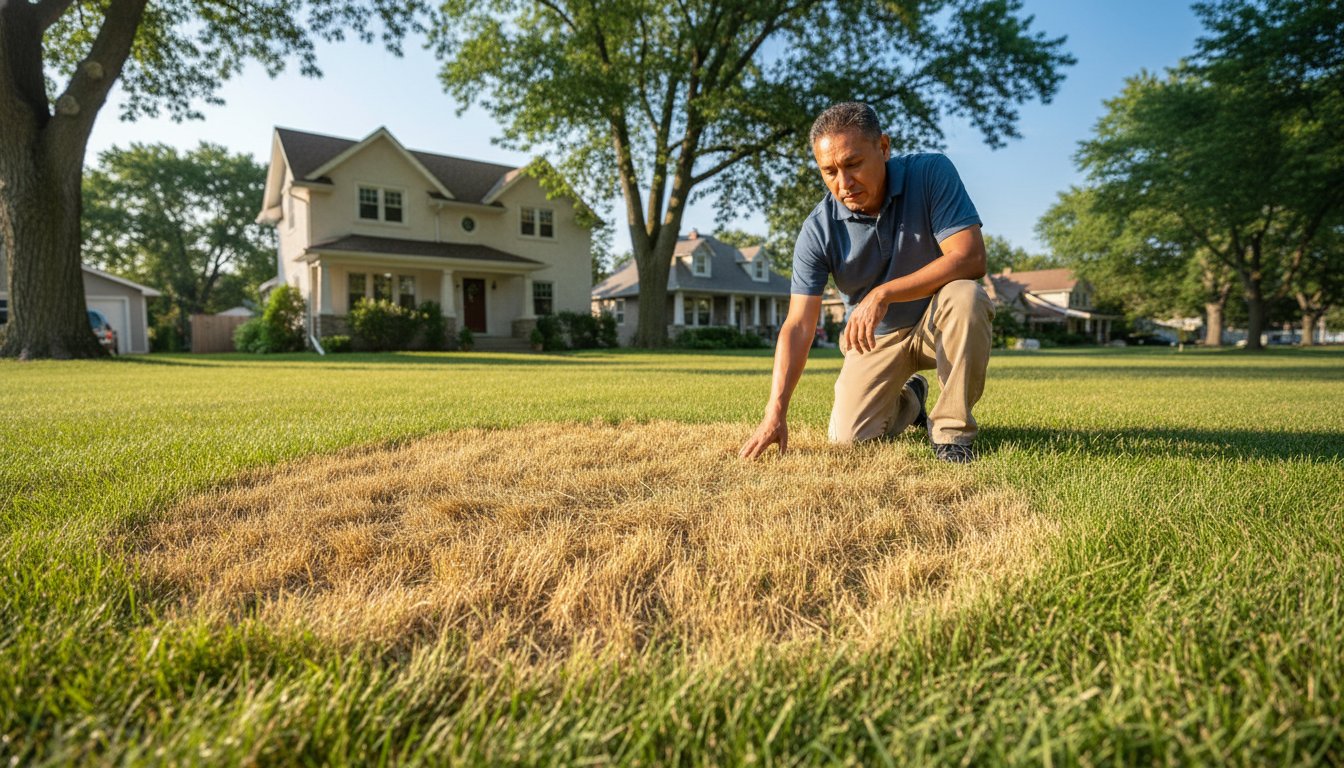
Last July, a homeowner in River Heights dumped 4,000 litres of water on his lawn only to watch the brown patches grow larger by the day. It’s incredibly frustrating to see your hard work turn into a straw-coloured mess when you think you’re doing everything right. You likely suspect drought, but in Manitoba, those spreading dead zones often signal a hidden invasion. If your grass feels crunchy even after a heavy soak, you’re likely dealing with a pest that thrives in our hot, dry Prairie summers.
This guide provides the definitive strategy for chinch bug control tailored specifically to Winnipeg’s 2026 environmental standards. We know that navigating Manitoba’s strict cosmetic pesticide regulations can be confusing for many property owners. You’ll learn how to stop the damage immediately and identify the exact pest causing the chaos without the guesswork. Maintenance Time is here to ensure your property remains a source of pride rather than a weekend chore.
We’ll walk you through the simple coffee tin test for certain identification, explore effective treatment options that comply with local laws, and establish a low-maintenance prevention plan. By the end of this article, you’ll have the local expertise needed to restore your lawn’s health and keep it vibrant for the entire season.
Key Takeaways
- Learn how to use the "Coffee Can Test" to identify early infestations before they cause permanent damage to your grass.
- Navigate the 2026 Manitoba pesticide regulations to ensure your chinch bug control methods are both legal and effective.
- Discover a simple two-step recovery plan to stop toxins from spreading and help your Winnipeg lawn bounce back fast.
- Understand why areas near pavement are high-risk zones and how to adjust your watering routine to protect them.
- See how a professional, local-first approach can take the guesswork out of pest management for a hassle-free yard.
What Are Chinch Bugs and Why Are They Attacking Your Winnipeg Lawn?
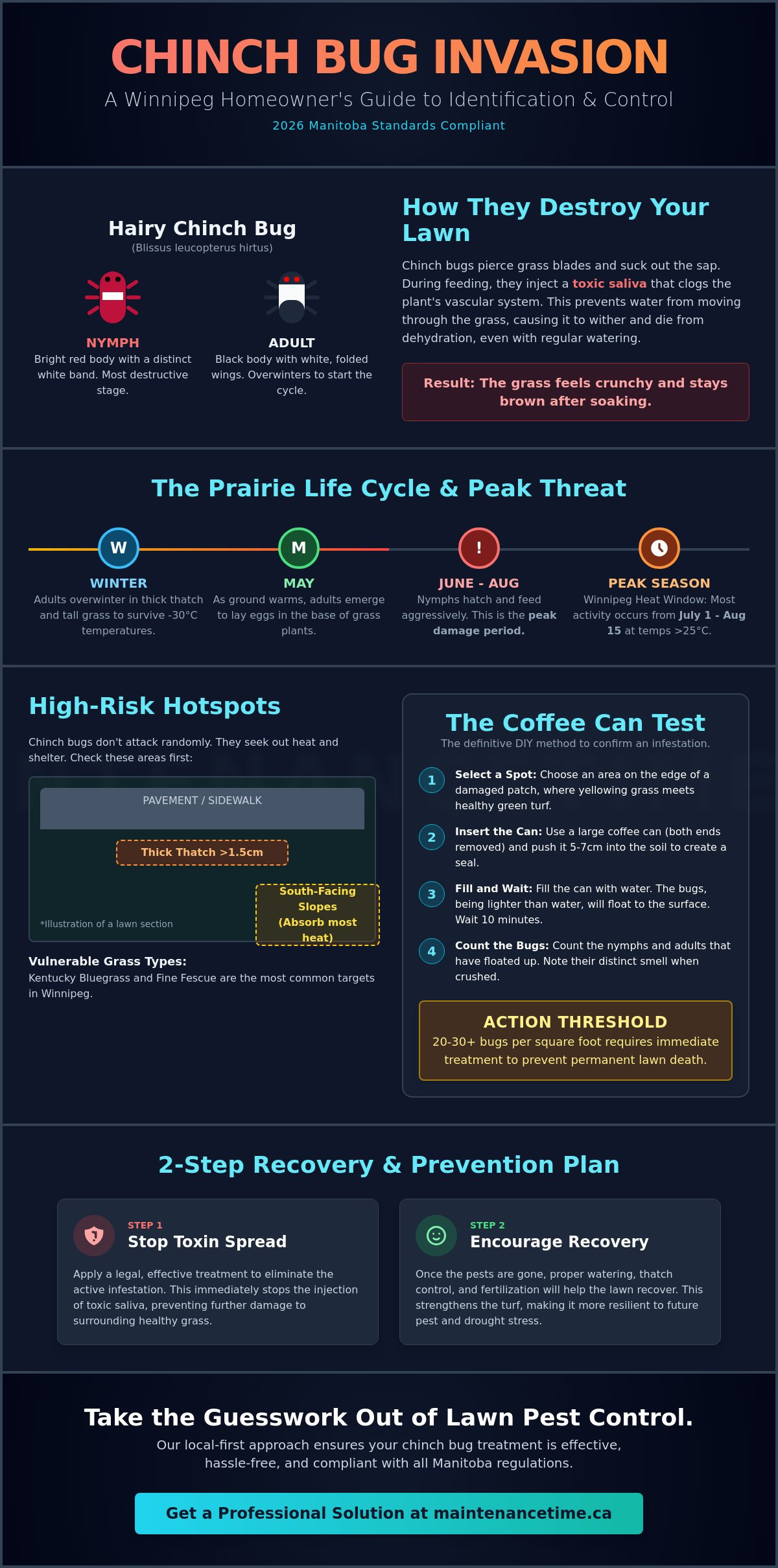
Winnipeg summers are short but intense. Hairy chinch bugs are tiny, sap-sucking insects that thrive in our Manitoba climate. While closely related to the true chinch bug found in other regions, the hairy variety is the primary culprit in local yards. These pests don't just eat your grass; they destroy it from the inside out. When they feed, they inject a toxic saliva into the plant tissue. This toxin blocks the vascular system, effectively stopping water from moving through the blades. Even if you water your lawn daily, the grass dies of thirst because it cannot absorb the moisture.
Timing is everything for these insects. Most damage occurs during the Winnipeg Heat Window, which typically runs from late June through August. This is when temperatures consistently hit 25°C or higher. Homeowners often mistake the resulting yellowing patches for simple drought dormancy. However, drought-stressed grass usually recovers after a heavy rain or consistent watering. Chinch bug damage does not. If your grass stays brown and brittle after a deep soak, you likely need professional chinch bug control to save your turf before the roots die completely.
The Chinch Bug Life Cycle in the Prairies
Adults are hardy survivors. They over-winter in thick thatch or tall grass near Winnipeg foundations to escape -30°C winter temperatures. As the ground warms in May, they emerge to lay eggs. The nymph stage is the most destructive phase for your property. These young bugs are bright red with a distinct white band across their backs. They feed aggressively as they mature into black-and-white adults. Maintenance Time recommends treatment once you hit the economic threshold of 20 to 30 bugs per square foot, as populations beyond this level cause rapid, permanent lawn death.
Vulnerable Grass Types in Manitoba
Not every yard is an equal target. Kentucky Bluegrass and Fine Fescue are the primary targets in local yards because they are the most common species used in Winnipeg sod and seed mixes. You will usually see the first signs of trouble on sunny, south-facing slopes. These areas absorb the most heat, creating a perfect incubator for pest eggs. Thick thatch also plays a major role in infestations. It acts as a luxury hotel for these insects, providing a humid environment and protection from natural predators. Keeping your thatch layer under 1.5 centimetres is a vital step in effective chinch bug control and long-term lawn health.
- Identification: Look for sunken, brown patches that expand outward.
- The Toxin: Saliva prevents water transport, mimicking extreme drought.
- Peak Season: Activity spikes between July 1st and August 15th.
- Local Risk: South-facing yards with high thatch are at the highest risk.
How to Identify Chinch Bug Damage: The Coffee Can Test
Chinch bug damage often mimics the signs of drought, making it easy to ignore until the problem becomes severe. You'll typically notice yellowing patches at the edges of your lawn that slowly expand into dead, brown centres. These pests thrive in hot, dry conditions. This is why damage almost always starts near pavement, sidewalks, or concrete curbs. These hard surfaces act as heat traps, radiating warmth into the soil and creating a perfect incubator for a population explosion. Effective chinch bug control begins with recognizing these early warning signs before the patches merge and destroy your entire yard.
If you suspect an infestation, try the odour test. When you crush these tiny insects, they release a distinct, offensive smell. It's a quick, albeit unpleasant, way to confirm their presence. For a more scientific look at their life cycle and habits in the Canadian climate, Health Canada's chinch bug guide offers reliable data that helps Winnipeg homeowners understand what they're up against.
Step-by-Step: The Coffee Can Float Test
The float test is the gold standard for DIY identification. It forces the bugs out of the thatch so you can see them clearly. You'll need a large metal coffee can with both the top and bottom removed to create a hollow cylinder. Follow these steps for an accurate count:
- Select a spot on the edge of a damaged patch where yellowing grass meets green turf.
- Push the can 5 to 7 centimetres deep into the soil. You may need a garden knife to cut a small circle in the turf first.
- Fill the can with water and keep it topped up for 10 minutes. Don't let the water level drop, as the bugs need to float to the surface.
Count the insects that rise to the top. You're looking for small, wingless nymphs that are bright red or orange with a white band across their backs. Mature adults are roughly 4 millimetres long, featuring black bodies and white wings. If you find more than 20 to 25 bugs in a single can, the infestation level is high enough to cause significant turf loss.
Common Look-Alikes: Drought vs. Chinch Bugs
Don't assume every brown spot requires a chemical treatment. You can distinguish pests from environmental stress using two simple methods. First, try the tug test. Pull firmly on a handful of affected grass. If the turf lifts up easily like a piece of carpet, you likely have white grubs eating the roots. Chinch bug damage leaves the roots intact, so the grass stays firmly anchored even when it's dead.
Second, use the water test to rule out simple dehydration. Give the brown area a heavy soaking for 48 hours. If the grass doesn't show signs of greening up within two days, you aren't dealing with a dry spell. Many lawn care winnipeg experts use these diagnostic steps to ensure they're treating the right problem. If you're tired of guessing what's killing your grass, let the team at Maintenance Time provide a professional assessment to get your lawn back on track.
Effective Chinch Bug Control Methods in Manitoba
Winnipeg homeowners often ask if it's even legal to spray for pests anymore. As of 2026, Manitoba’s Cosmetic Pesticide Ban still dictates how we manage local yards. You can't simply use any chemical found online or across the border. Using unapproved products isn't just a risk to your grass; it's a violation of provincial environmental laws. We focus on methods that are both legal and effective for our specific climate. Reliable chinch bug control in our city requires a mix of biological balance and approved spot treatments.
Avoid the temptation of "quick fixes" from the US or other provinces. Products sold in North Dakota often contain active ingredients that are strictly prohibited in Manitoba. These substances can linger in the Red River Valley soil and harm local pollinators. We stick to Health Canada-approved solutions that target the pest without destroying the local ecosystem. It's about keeping your property safe and compliant while achieving that deep green look.
Natural and Biological Solutions
Nature often provides the best defense against a lawn invasion. Big-eyed bugs are the heroes of a healthy Winnipeg yard. These natural predators look similar to chinch bugs but spend their time eating them instead of your grass. Encouraging these beneficial insects is a cornerstone of professional lawn care. Research from University of Florida's chinch bug management studies confirms that cultural practices are just as vital as treatments. Since these pests thrive in hot, dry conditions, keeping your lawn consistently moist is a simple way to discourage them. We also utilize high-quality insecticidal soaps. These soaps coat the insects and disrupt their breathing, providing a low-toxicity way to clear out a colony without harsh residues.
Chemical Options and Manitoba Regulations
When an infestation moves beyond the reach of soap, professional-grade options come into play. Licensed applicators in Manitoba have access to specific tools that aren't available to the general public. These treatments are regulated and applied with precision to ensure they don't leach into the groundwater. Using "black market" pesticides is a major risk to your soil health. These unvetted chemicals often kill the microbes your grass needs to process nutrients. Instead of risking your dirt, focus on building plant immunity. Knowing when to fertilize your lawn is a key part of chinch bug control. A well-fed lawn has the energy to repair the vascular damage caused by insect feeding. We help you time these applications so your grass stays thick enough to crowd out pests naturally.
A Step-by-Step Recovery Plan for Your Lawn
Stopping an infestation is only half the battle. Once the pests are managed, your Winnipeg lawn needs a focused recovery strategy to regain its strength. Effective chinch bug control involves shifting your maintenance habits to make the environment inhospiteable for future generations. Follow these four actions to rebuild a resilient turf.
- Action 1: Deep, localized watering. Chinch bugs thrive in hot, dry conditions. Apply 2.5 cm of water to affected areas immediately. This cools the soil surface and can actually drown nymphs before they mature.
- Action 2: Remove excess thatch. Thatch is the layer of organic debris between the grass blades and the soil. If this layer exceeds 1.5 cm, it acts as a protective nursery for pests. Use a power rake to thin this out.
- Action 3: Overseed with endophyte-enhanced seed. Choose grass varieties like fescue or perennial ryegrass that contain endophytes. These are beneficial fungi that live within the grass and produce a natural toxin that repels surface-feeding insects.
- Action 4: Adjust your mowing height. Keeping your grass at a height of 7.6 cm (3 inches) provides shade for the soil. This prevents the high temperatures that trigger rapid chinch bug reproduction.
Repairing the Dead Zones
Dead patches won't heal on their own if the damage is severe. Start by using a leaf rake to gently remove brown, shriveled material. You want to expose the soil without tearing up the surviving root systems. In Winnipeg, the most successful window for overseeding is between August 20 and September 15. This allows the new growth to establish before the first hard frost. If the cleanup feels overwhelming, grass cutting services can provide the professional equipment needed to clear debris and prepare a clean seedbed for you.
Long-Term Prevention Through Maintenance
A thick lawn is your best defense. When grass is kept at 3 inches, it develops deeper roots and holds moisture longer. This density makes it harder for pests to move through the turf. You should also watch for invasive species like quack grass, which can create uneven patches that hide early signs of pest activity. Annual core aeration is another vital step. It increases soil oxygenation and helps water reach the root zone instead of sitting in the thatch. These consistent habits ensure your lawn stays healthy enough to resist future attacks without heavy chemical intervention.
Don't let a damaged lawn stress you out this season. Contact Maintenance Time today for professional lawn care and recovery services that give you back your weekends.
Hassle-Free Winnipeg Lawn Care with Maintenance Time
Identifying a pest problem is often the most frustrating part of homeownership. Chinch bugs are barely 4mm long, making them nearly invisible to the untrained eye until the damage is already done. Maintenance Time removes this guesswork by providing expert eyes on your property. We don't just guess; we diagnose. Our team understands that effective chinch bug control in Winnipeg requires a deep understanding of our heavy clay soils and the rapid temperature shifts we see throughout the summer months. We offer integrated property maintenance plans designed to build lawn resilience. These plans prevent infestations before they can take hold of your yard. You deserve to reclaim your summer. Stop spending your evenings researching pesticides and start enjoying your patio while we handle the technical details.
Our approach includes a variety of preventative measures that keep your turf strong enough to resist pests naturally:
- Consistent nutrient management tailored to Manitoba's 2026 climate.
- Core aeration to reduce thatch where pests love to hide.
- Proper hydration strategies that account for Winnipeg's specific rainfall patterns.
- Professional monitoring during peak heat cycles in July and August.
Why Winnipeg Trusts Maintenance Time
We've built our business on being the most reliable partner for local homeowners. Our lawn mowing service acts as an early warning system for your turf. While we trim the grass, we’re also looking for the thinning patches and yellowing blades that signal trouble. This proactive approach saves homeowners an average of 15 hours of labor per month. We take pride in our approachable service. We're the professionals who feel like helpful neighbors. We handle the heavy lifting and the dirty work so you can simply enjoy a healthy, green space without the stress of DIY pest management.
Get a Professional Assessment Today
Our quoting process is entirely hassle-free. We provide clear, direct communication about what your lawn needs to stay healthy throughout the year. Reliability is our hallmark. We offer a seamless transition between seasons, moving from summer chinch bug control and lawn care to professional snow removal once the winter hits. This year-round commitment ensures your property value is protected regardless of the weather. We're dedicated to keeping your yard looking its best from the first thaw to the first snowfall. Ready to see the difference professional care makes? Schedule your Winnipeg lawn assessment with Maintenance Time and let us handle the stress of property maintenance for you.
Restore Your Green Grass and Protect Your Investment
Don't let a chinch bug infestation destroy the hard work you've put into your yard. Identifying the damage early through the coffee can test is essential for a fast recovery. Effective chinch bug control in Winnipeg requires a proactive plan that combines targeted treatments with the right irrigation and aeration schedule. When these pests strike, a quick response prevents the brown patches from spreading across your entire property.
Maintenance Time has served the Winnipeg community since 2018. Our team consists of licensed and insured lawn care professionals dedicated to providing hassle-free, year-round property maintenance. We understand the specific soil conditions and climate challenges in Manitoba, ensuring your lawn stays resilient against local pests. We handle the technical details so you can enjoy a beautiful outdoor space without the stress of DIY trial and error.
Save your lawn from chinch bugs; Book a professional assessment with Maintenance Time today!
Your lawn is a vital part of your home's value and curb appeal. Let's work together to make it the healthiest on the block.
Frequently Asked Questions
Can chinch bugs live in my house or bite pets?
No, chinch bugs won't live in your house or bite your pets. These pests are strictly grass-feeders that survive by sucking the sap from lawn blades. They are only 4 millimetres long and pose zero health risks to dogs or cats. If you see them on your siding, they're likely just looking for a way back to the grass. Maintenance Time ensures your home stays pest-free by focusing on outdoor lawn health.
How long does it take for a lawn to recover from chinch bug damage?
A lawn typically takes 21 to 42 days to show signs of recovery after effective chinch bug control treatments. If the damage is severe, you might need to overseed the affected patches in late August to see full results by the following spring. Consistent watering is essential during this period. We help Winnipeg homeowners speed up this timeline by providing expert care and nutrient-rich soil top-dressing.
Are there specific grass seeds that are resistant to chinch bugs in Winnipeg?
Yes, you should look for endophyte-enhanced grass seeds like specific varieties of perennial ryegrass or tall fescue. These seeds contain a natural fungus that's toxic to chinch bugs but harmless to your family. In Winnipeg, using a blend with at least 40 percent endophyte-enhanced seed significantly reduces the risk of future infestations. It's a proactive way to build a resilient lawn without relying solely on reactive treatments.
Does a brown lawn in August always mean I have chinch bugs?
No, a brown lawn in August doesn't always indicate a pest problem. Winnipeg lawns often enter dormancy after 14 days of temperatures exceeding 30 degrees Celsius without significant rainfall. To check for pests, use the coffee tin test by cutting both ends off a can and pressing it into the soil. If you see more than 20 insects floating in water within 10 minutes, you need professional chinch bug control.
What is the best time of day to water my lawn to prevent pests?
The best time to water your lawn is between 5:00 AM and 9:00 AM. Watering during these early hours allows the grass blades to dry before evening, which prevents the damp conditions that fungal diseases love. It also ensures the roots absorb the moisture before the midday sun evaporates it. Proper hydration makes your grass stronger and less attractive to pests that thrive in dry, stressed turf.
Will chinch bugs come back every year if I don’t treat them?
Yes, chinch bugs will likely return every year if you don't address the underlying thatch and soil issues. These insects overwinter in the thatch layer of your lawn, surviving Winnipeg winters as cold as minus 30 degrees Celsius. Without treatment, a small population can grow into a massive infestation by July of the following year. Maintenance Time provides the year-round reliability you need to break this cycle and keep your property looking its best.


