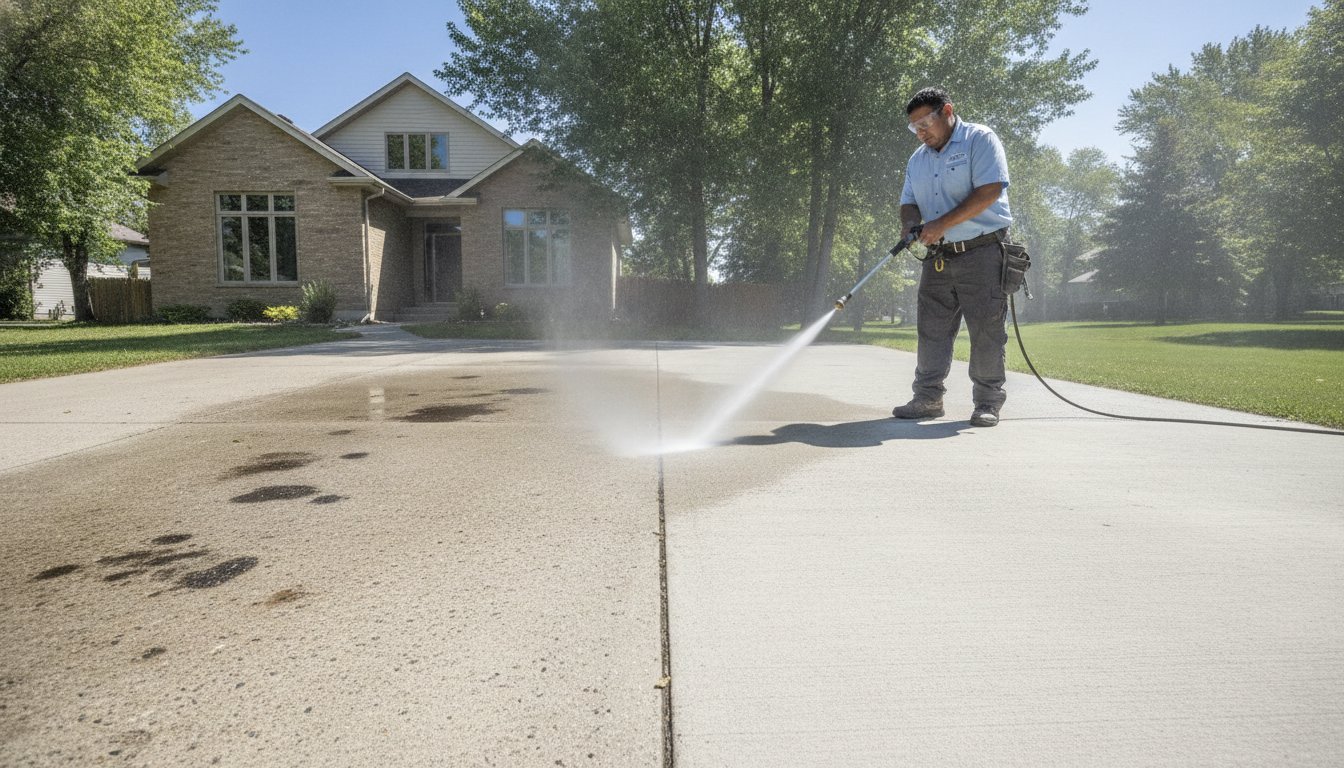
That dark, stubborn puddle on your concrete is more than just an eyesore; it's a structural threat to your property. In our climate, hydrocarbons from motor oil actually weaken the surface of your driveway, making it vulnerable to the relentless Manitoba freeze-thaw cycles that cause cracking and scaling. You've likely worried about tracking that grease into your clean house or wondered if a DIY scrub might accidentally eat through the finish.
We understand how frustrating it is to see your home's curb appeal suffer because of a few leaks. This guide will teach you the most effective techniques for driveway oil stain removal in Winnipeg so you can restore your property's value without damaging the environment. We'll preview the best 2026 cleaning products, explain the City of Winnipeg's sewer by-laws regarding runoff containment, and help you decide when a simple home remedy is enough or when it's time to call in the professionals. By the end of this article, you will have a clear plan to get your driveway looking pristine again while protecting your investment for years to come.
Key Takeaways
- Learn how to identify different vehicle fluids by color and viscosity to choose the most effective cleaning method for your driveway.
- Master the professional "Blot, Don’t Rub" technique to stop fresh spills from spreading or soaking deep into porous concrete.
- Discover why specialized driveway oil stain removal Winnipeg techniques are necessary to remove aged stains that standard garden hoses and household soaps can't reach.
- Understand the limitations of DIY degreasers and when to delegate the job to experts with high-powered pressure washing equipment.
- Find out how regular maintenance and concrete sealing act as a proactive defense against future leaks and harsh seasonal weather.
Why Oil Stains are a Structural Threat to Winnipeg Driveways
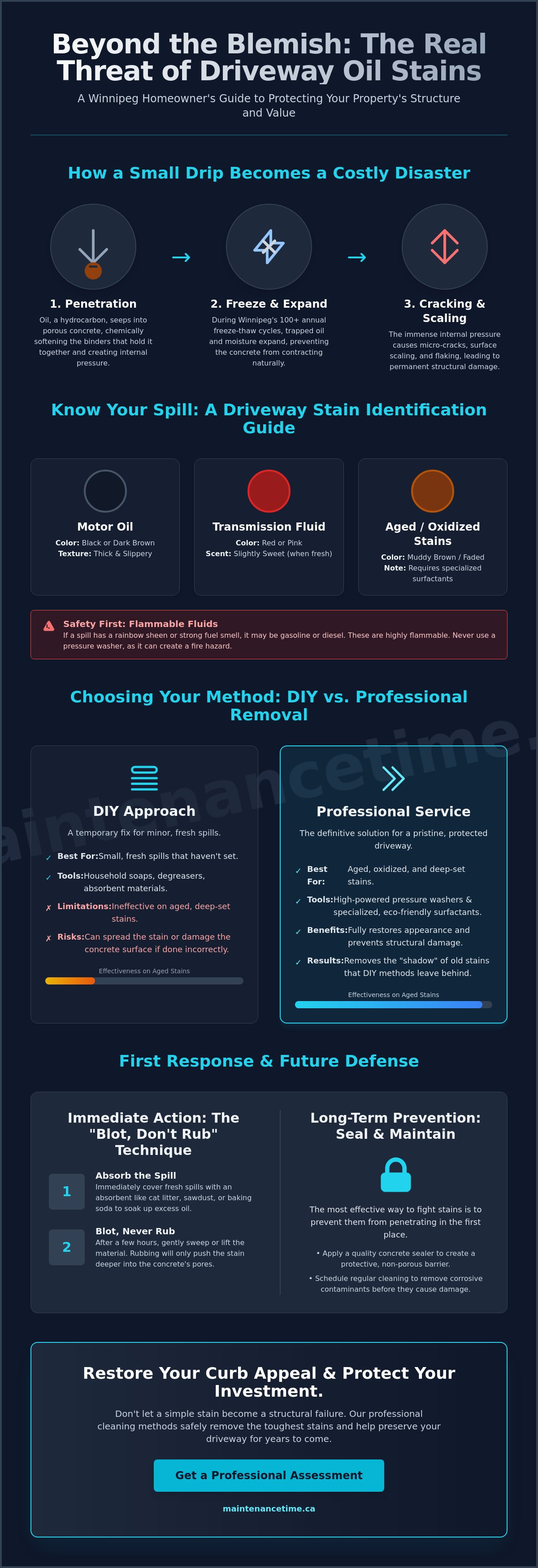
Most Winnipeg homeowners see an oil spot and think only about curb appeal. They worry about the dark mark ruining the clean look of their property. While aesthetics matter, the real danger is happening beneath the surface. Oil is a hydrocarbon that actively contributes to concrete degradation by compromising the internal structure of the slab. If you ignore a small leak in July, you aren't just leaving a stain. You're giving the winter weather a head start on destroying your pavement. By the time the ground thaws, that simple spill could evolve into a costly repair bill.
The Science of Concrete Porosity and Hydrocarbons
Think of your driveway as a very hard sponge. Concrete is naturally porous, filled with microscopic channels that allow it to release moisture and "breathe." Concrete porosity is the volume of void spaces within the material that dictates how well the slab can withstand the elements over its lifespan. When motor oil or transmission fluid hits the surface, it gets sucked into these pores immediately. Because oil is more viscous than water, it displaces the air that should be in those voids. It creates constant internal pressure. Unlike water, oil doesn't evaporate. It stays trapped in the pores; it acts as a chemical wedge that slowly softens the binders holding the concrete together. Over time, this makes the surface brittle and prone to crumbling.
Winnipeg Climate Factors: Salt, Sand, and Oil
Our city faces a brutal reality of over 100 freeze-thaw cycles every year. This constant shifting between freezing and melting is already hard on residential surfaces. When oil saturates the concrete, the problem compounds. During the winter months, road salt acts as a catalyst. It lowers the freezing point of water, which allows moisture to carry oil even deeper into the substrate. This creates what we call "winter sludge." This mixture prevents the concrete from contracting and expanding naturally as temperatures fluctuate.
In the summer, this might look like a simple stain. By March, those oil-soaked areas become the first places to buckle under the pressure of expanding ice. This is why driveway oil stain removal Winnipeg homeowners prioritize in the spring is about more than just looks. It's about structural survival. The "Winter Sludge" effect often leads to:
- Increased surface tension that causes micro-cracks.
- Trapped fluids that prevent the slab from contracting properly in extreme cold.
- Accelerated scaling where the top layer of the driveway begins to flake and peel away.
Spring is the most critical window for professional maintenance. Scheduling driveway oil stain removal Winnipeg experts to clear these spots ensures your concrete remains structurally sound before the next winter hits. Taking action now prevents a small drip from becoming a structural failure.
Common Driveway Stains and How to Identify Them
Before you start scrubbing, you need to know exactly what you're fighting. A black engine oil leak requires a different approach than a pink transmission fluid spill. In Winnipeg, our extreme weather can make identification tricky. Sun exposure and road salt often bleach the edges of a stain. This leaves a "shadow" that looks like harmless dirt but is actually deep-set grease. Identifying the fluid correctly ensures you don't waste time or money with ineffective cleaners.
Safety is your first priority. If the spill smells strongly of fuel or has a rainbow sheen, it might be gasoline or diesel. These are highly flammable. Refer to this EPA guide to oil spills for insights on handling hazardous materials and understanding the environmental risks of runoff. Never use a pressure washer on a large gasoline spill. It can aerosolize the fuel and create a fire hazard.
Motor Oil vs. Transmission Fluid
Engine oil is usually black or dark brown. It feels thick and slippery. Transmission fluid and power steering fluid are typically red or pink. If the stain is fresh, it will have a distinct, slightly sweet smell. As these fluids age, they oxidize and turn a muddy brown. This chemical shift is why older stains require specialized surfactants. Standard dish soap won't cut through the molecular bond of an oxidized oil shadow. If you're unsure about the age or type of your stain, a professional pressure washing assessment can save you hours of trial and error.
Secondary Stains: Rust and Irrigation Runoff
Not every orange or brown mark is oil. Winnipeg's hard water often leaves mineral deposits that look like light brown staining. Rust spots from metal lawn furniture or snow shovels are bright orange and gritty to the touch. These are iron oxide deposits, not hydrocarbons. Treating a rust spot with an oil degreaser won't work. It requires an acid-based cleaner. On older residential properties, you'll often find multi-layered stains. This is where years of irrigation runoff, road salt, and minor car leaks have bonded together. Effective driveway oil stain removal Winnipeg services involve identifying these layers to use the right chemical sequence for a total clean.
DIY vs. Professional Driveway Oil Stain Removal
Deciding whether to tackle a stain yourself or hire a specialist depends on the age of the spill and the depth of the penetration. A fresh drip from last night is a manageable weekend project. A year-old shadow that has survived a Winnipeg winter is a different story. While DIY methods are cost-effective for minor maintenance, they often lack the heat and pressure required to lift hydrocarbons from deep within the concrete's "hard sponge" structure. Understanding the limits of your equipment prevents you from wasting a Saturday on a stain that won't budge.
Garden hoses and standard household degreasers only clean the surface. They don't reach the oil trapped in the pores. Many homeowners try to compensate by using a consumer-grade pressure washer, but this carries risks. Without the right nozzle or technique, it's easy to "etch" the concrete. This leaves permanent gouge marks or "tiger stripes" that look worse than the original oil spot. Professional driveway oil stain removal Winnipeg services use hot water units that reach temperatures capable of breaking the molecular bond between the oil and the pavement.
The DIY Toolbox: What Actually Works
If you catch a leak early, your pantry is your best friend. Start with absorbents like cat litter, baking soda, or cornstarch. These materials pull liquid oil out of the pores before it has a chance to bond. Spread the material thickly over the spot and let it sit for at least 24 hours. Once you sweep up the dry material, use a specialized concrete degreaser rather than standard dish soap. The "Scrub and Wait" method involves applying the cleaner, agitating it with a stiff nylon brush, and letting it dwell for 15 minutes before rinsing. Never use a wire brush, as it can leave metal fragments that eventually rust and create new orange stains.
When to Call a Winnipeg Pressure Washing Expert
Large-scale spills or stains in high-traffic parking areas usually require industrial intervention. Professional teams use specialized surface cleaners. These are spinning discs that provide consistent, even pressure across the entire slab. This is much safer than a standard wand, which focuses too much force on a single point. Delegating the task to a professional pressure washing service ensures the job is done correctly without the risk of surface scaling. This is especially important for driveway oil stain removal Winnipeg residents need after a spring melt, as the concrete is already stressed from the winter. Experts also ensure all runoff is contained according to local by-laws, protecting your liability and the environment simultaneously.
Step-by-Step Guide to Removing Fresh Oil Spills
Speed is your best ally. You have about 60 minutes before the oil begins migrating deep into the concrete's pores. The golden rule is simple: Blot, Don’t Rub. Rubbing the spill pushes the oil deeper and expands the stain's footprint. Instead, use a paper towel or an old rag to soak up standing liquid. This immediate response is the foundation of successful driveway oil stain removal Winnipeg homeowners can manage themselves. Realistic expectations are necessary; older concrete is incredibly porous and may retain a slight shadow even after a thorough clean, but stopping the initial spread prevents long-term structural damage.
The Absorption Phase
The goal of this phase is to pull as much liquid as possible out of the "hard sponge" of your driveway. Follow these steps to maximize oil extraction:
- Step 1: Apply the material. Cover the spot with a thick layer of cat litter or baking soda. These materials are highly absorbent and inexpensive.
- Step 2: Agitation. Use a stiff-bristled nylon brush to grind the absorbent into the stain. This agitation ensures the material makes contact with the oil trapped in the surface texture.
- Step 3: Dwell time. Leave it for at least 24 hours. The material needs time to wick the hydrocarbons out of the concrete.
The Deep Clean and Rinse
Once you sweep up the dry material, you will likely see a dark shadow where the oil bonded with the surface. Rinsing this area requires careful attention to Winnipeg’s environmental standards. Our city uses a combined sewer system in many neighborhoods, meaning chemicals washed into storm drains can end up in the Red or Assiniboine rivers.
- Step 4: Degreaser. Apply a concentrated concrete degreaser to the remaining shadow and scrub again with your nylon brush.
- Step 5: Rinsing. Contain all rinse water on your property. Use a wet-dry vacuum to collect the residue or direct it toward a grassy area on your yard that can act as a natural filter.
- Step 6: Repeat. If a "ghost" stain persists, you may need to repeat the degreasing step.
Proper disposal is your final responsibility. Oil-soaked absorbents are considered hazardous waste. Don't toss them in your regular garbage bin. Take these materials to a 4R Winnipeg Depot to ensure they're handled according to local environmental regulations. If the stain is too deep for household tools, a professional pressure washing service can provide the industrial heat needed to lift the remaining residue safely.
Maintaining a Stain-Free Driveway in Winnipeg
Cleaning up a spill is a great first step, but long-term success requires a proactive defense. Regular maintenance prevents the permanent concrete discoloration that occurs when hydrocarbons are left to settle. In our climate, the best way to stop the "hard sponge" effect is through professional concrete sealing. A high-quality sealer creates a non-porous barrier that keeps oil on the surface, making future driveway oil stain removal Winnipeg tasks significantly easier. We recommend scheduling this protection in the fall. Prepping your driveway before the first snowfall ensures your concrete is shielded from the salt, sand, and vehicle leaks that define a Manitoba winter. This proactive approach should be a standard part of your broader property maintenance routine.
Proactive Prevention Strategies
You don't have to wait for a leak to take action. If you own an older vehicle prone to occasional drips, place a low-profile drip tray in your garage or on your parking pad. It's a simple way to catch fluids before they touch the concrete. Furthermore, following the advice of automotive protection experts like D3 Auto Care LLC can help you maintain your vehicle’s overall condition and prevent potential leaks before they start. Additionally, make it a habit to rinse your driveway during the spring thaw. Removing winter road salt quickly prevents it from acting as a catalyst that pulls old oil deeper into the slab. You should also consider how other maintenance tasks affect your driveway. For example, regular gutter cleaning prevents overflow from carrying roof debris and shingle grit across your concrete. This runoff often leaves "secondary" stains that trap oil and moisture against the surface.
The Maintenance Time Inc Advantage
We pride ourselves on being a dependable partner for local homeowners. Our team possesses the specialized knowledge required to handle Winnipeg’s toughest exterior challenges. We don't just spray water; we use professional pressure washing equipment that balances heat and force to protect your driveway’s structural integrity. We understand the specific by-laws regarding runoff and ensure every job is environmentally responsible.
Our goal is to provide a frictionless experience that saves you time. We integrate driveway care into a comprehensive, year-round property plan that includes everything from window cleaning to snow removal. This total service delegation means you never have to worry about the state of your curb appeal. By choosing a partner with local expertise, you ensure that your driveway oil stain removal Winnipeg needs are met with professional standards and lasting results. We take pride in our workmanship so you can take pride in your home.
Take Action to Restore Your Driveway
Maintaining your property’s value requires more than just a quick rinse with a garden hose. You now understand how to identify vehicle leaks and why immediate absorption is critical to preventing permanent damage. By addressing these spots early, you protect your concrete from the destructive force of our local freeze-thaw cycles. Professional driveway oil stain removal Winnipeg homeowners trust ensures that even the most stubborn, deep-set shadows are lifted without damaging the surface integrity of your slab. Similarly, maintaining your vehicle’s glass is a crucial part of asset protection; you can learn more about professional repair services from Auto Glass Ottawa.
Maintenance Time Inc is locally owned and operated; we've been serving the Winnipeg community since 2018. Our team uses professional-grade hot water pressure washing equipment to deliver consistent, high-quality results that standard DIY tools simply can't match. We take the stress out of property upkeep so you can enjoy a pristine home without the heavy labor. Request a Free Pressure Washing Quote from Maintenance Time Inc to get started today. Your driveway is a significant investment; let's work together to keep it looking new and structurally sound for years to come.
Frequently Asked Questions
Can pressure washing remove old oil stains from concrete?
Yes, professional hot water pressure washing is highly effective for lifting old oil stains from concrete. While a standard cold water garden hose or consumer-grade machine lacks the thermal energy to break molecular bonds, industrial units heat water to temperatures that liquefy the grease. This allows the detergent to penetrate the pores and lift the shadow. For the best driveway oil stain removal Winnipeg residents should choose a service that uses these high-temperature systems.
Is it safe to use muriatic acid on my driveway to remove oil?
No, using muriatic acid is not recommended for oil removal because it's a powerful etchant that eats into the concrete surface rather than dissolving the oil. If applied incorrectly, it can cause permanent pitting or "burning" of your driveway. Acid is better suited for removing mineral deposits or rust. For oil, stick to alkaline-based degreasers that neutralize the hydrocarbons without compromising the structural integrity of the slab.
What is the best household product for a fresh oil leak?
Cat litter and baking soda are the best household tools for absorbing a fresh oil leak before it sets. These materials act as desiccant sponges to pull liquid oil out of the concrete texture. Once you sweep up the dry material, a concentrated grease-cutting dish soap can help lift any remaining surface residue. It's a simple first step that prevents the oil from becoming a permanent structural threat.
Will oil stains on my driveway affect my home’s resale value in Winnipeg?
Yes, unsightly oil stains can negatively impact your home's curb appeal and perceived maintenance level during a sale. Potential buyers in Winnipeg often view a stained driveway as a sign of neglect or an indicator of hidden mechanical issues with vehicles. A clean, pristine driveway suggests the property has been well-maintained; this can help you secure a faster sale and potentially a higher offer in competitive neighborhoods. Just as you would prioritize a windshield replacement Florida to maintain a car's resale value and safety, keeping your driveway clear of oil spots is essential for preserving your home's market appeal.
How much does professional driveway oil removal cost in Winnipeg?
Professional driveway oil stain removal Winnipeg costs depend on the size of the area and the severity of the saturation. Most services provide a quote based on square footage and the specific type of chemical treatment required for deep-set stains. While DIY products might seem cheaper initially, a professional service includes industrial equipment and runoff containment that protects you from potential by-law infractions or environmental fines.
Can I remove oil stains from an asphalt driveway without damaging it?
You can remove oil from asphalt, but you must avoid harsh solvents that dissolve the bitumen binders holding the driveway together. Petroleum-based cleaners will actually melt the asphalt and create a soft spot. Instead, use a biodegradable, water-based degreaser and a soft-bristled brush. This lifts the oil without stripping away the essential oils that keep your asphalt flexible and resistant to Manitoba's cracking cycles.
Why do oil stains "reappear" after I think I have cleaned them?
Oil stains often "reappear" through a process called wicking. Concrete is porous, and even if the surface looks clean, oil can remain trapped deep in the slab. As the concrete dries or as temperatures change, the internal pressure pushes that trapped oil back to the surface. This is why professional treatments often involve multiple dwell times or specialized hot water cycles to ensure the hydrocarbons are extracted from the entire depth of the pore.
Is it better to clean my driveway in the spring or the fall?
It's best to clean your driveway in the spring to remove the "winter sludge" of salt and accumulated oil before the summer heat bakes it in. However, fall is the ideal time for sealing and preventative maintenance. Prepping your surface in September or October ensures that your concrete is protected against the upcoming freeze-thaw cycles. A clean, sealed surface is much easier to manage during the messy spring melt.


