
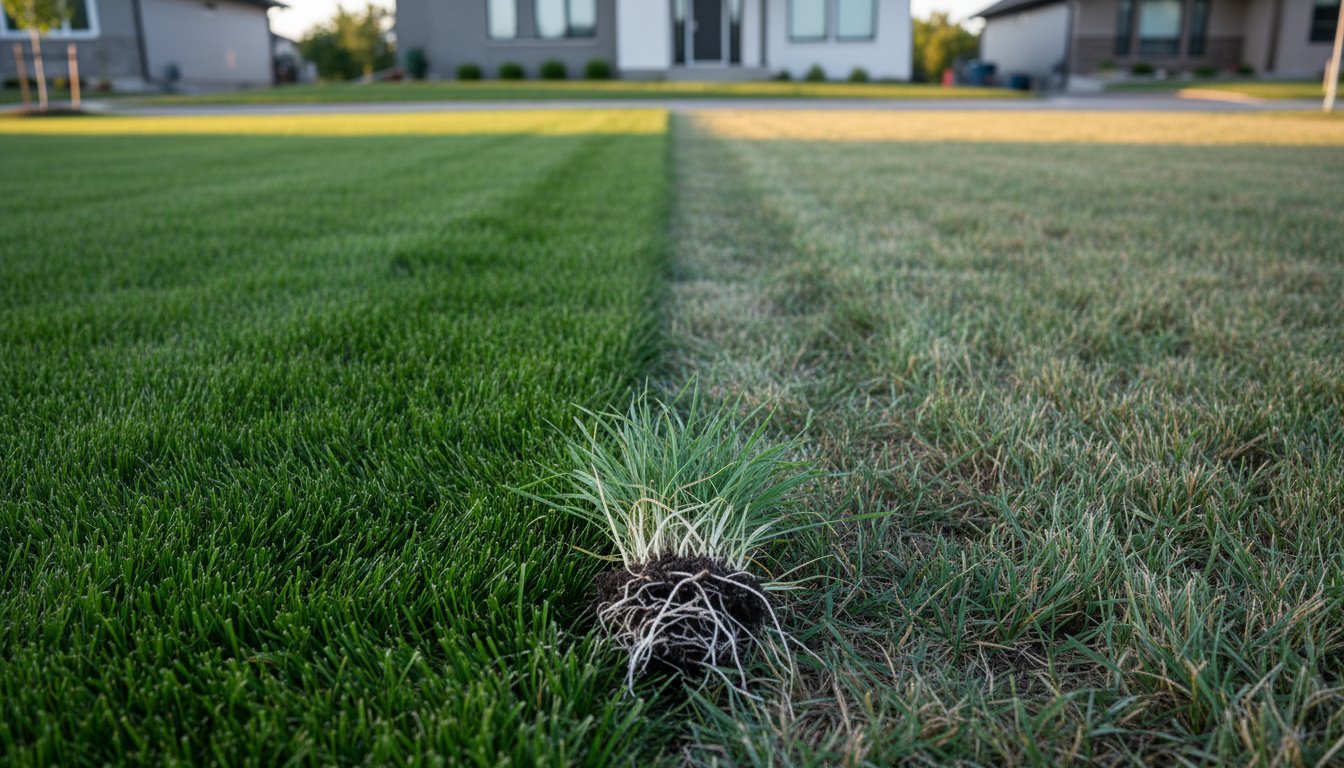
Pulling that stubborn weed by hand is actually the fastest way to double its population in your Winnipeg yard. For many local homeowners, a single afternoon of weeding results in quack grass spreading twice as fast into flower beds by the following week. This invader uses a complex underground rhizome system where a single plant can produce over 200 new shoots in one growing season. It's frustrating to watch your lawn become patchy and neglected despite your hard work.
We understand how discouraging it is to see your property's curb appeal drop because of an aggressive weed that refuses to quit. This 2026 guide provides the expert-led strategies you need to spot, stop, and prevent quack grass from taking over your outdoor space. We'll show you how to identify it correctly against crabgrass and implement a permanent removal strategy for a lush, uniform lawn. From professional-grade control methods to long-term maintenance, here is your roadmap to a hassle-free yard.
Key Takeaways
- Spot the enemy early by identifying visual markers like blue-green blades and unique clasping auricles before they spread across your yard.
- Understand the "rhizome factor" and how quack grass uses allelopathy to actively kill your desirable grass from underground.
- Get a step-by-step guide on mechanical removal techniques, including the "Deep Dig" method for clearing out stubborn, localized patches.
- Build a natural defense by adjusting your mowing strategy to shade out invaders and keep your Winnipeg lawn thick and competitive.
- Discover why professional consistency is the most reliable way to maintain a healthy, weed-free property without the hassle.
What is Quack Grass? Identification for Winnipeg Homeowners
Quack grass isn't just another weed. It's a persistent perennial known scientifically as quack grass (Elymus repens). This invasive species uses aggressive underground stems to spread through your yard, often outcompeting healthy Kentucky Bluegrass before you even notice it's there. At Maintenance Time Inc, we see this intruder across Winnipeg every season. It's a tough survivor that requires a professional eye to identify correctly.
In Winnipeg, we see a specific phenomenon during the moist spring months of May and June. While your regular lawn grows at a steady pace, quack grass undergoes what we call a growth spurt. It often towers 10 to 15 centimetres above the rest of your turf within days of a heavy Manitoba rainfall. This height difference is the first warning sign. If your lawn looks uneven just two days after a mow, you're likely dealing with this invasive species.
Don't confuse this with crabgrass. Many homeowners make that mistake and apply the wrong treatment, leading to wasted money and failed results. Crabgrass is an annual that thrives in the heat of July and August. In contrast, quack grass is a hardy perennial. It stays alive underground all winter, ready to choke out your lawn the moment the ground thaws in April. Because it's a perennial, simply waiting for frost won't kill it.
Key Physical Characteristics to Look For
- Check the auricles: Pull back a leaf blade from the stem. You'll see small, claw-like appendages called auricles that wrap tightly around the main stalk. This is the most reliable way to confirm its identity.
- Examine the roots: Dig up a small patch. You'll find white, sharp, cord-like rhizomes. These roots are incredibly strong; they've been known to pierce through buried wood or even growing potatoes in backyard gardens.
- Leaf texture: Run your finger over the upper surface of the blue-green blade. You'll feel a slight hairiness that sets it apart from smoother ornamental grasses.
Where it Hides in Your Yard
This weed is opportunistic. It loves to sneak into your property from Winnipeg's back alleys, riverbanks, or neighboring unkempt lots. We often find it concentrated near garden edges where the soil is looser and easier for those sharp rhizomes to penetrate. Look for "dead zones" where your flowers or shrubs seem to be struggling. Quack grass releases phytotoxins that inhibit the growth of nearby plants, clearing the way for its own expansion. Identifying these patches early is the only way to maintain your property's value and appearance.
Why Quack Grass is the 'Zombie Weed' of Manitoba
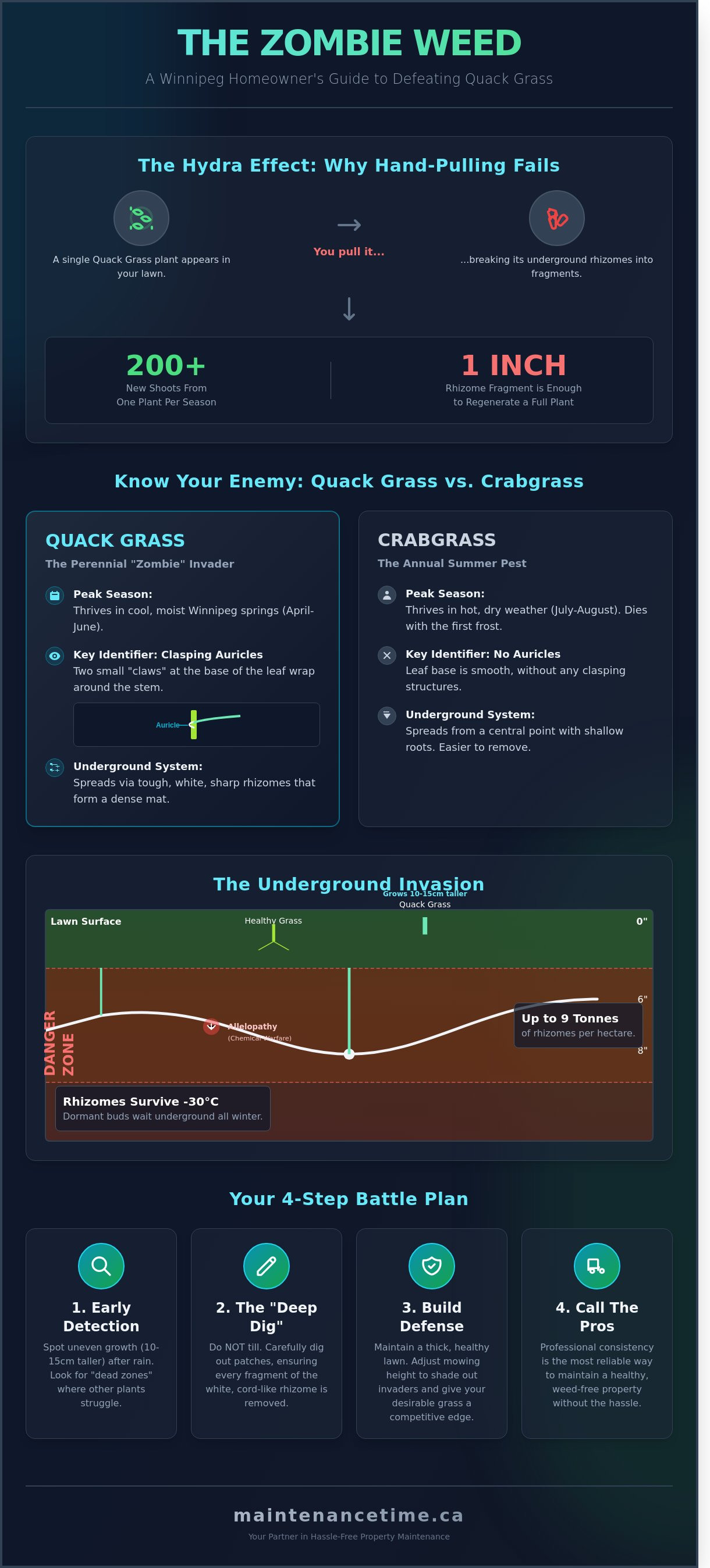
Quack grass isn't just another weed in your garden. It's a relentless survivalist. In Manitoba, we often call it the 'zombie weed' because it seems to rise from the grave no matter how hard you fight it. The secret to its resilience lies beneath the surface. This plant spreads through a complex network of underground stems known as rhizomes. In a heavily infested area, these rhizomes can weigh up to 9 tonnes per hectare. That is a massive amount of biological material dedicated solely to taking over your yard.
Winnipeg's specific climate creates the perfect conditions for this invasion. Our cool, moist springs serve as a launchpad for the weed. While your Kentucky Bluegrass is still shaking off the winter dormancy, quack grass is already growing at full speed. It gains a head start every April and May, quickly crowding out the grass you actually want. This plant is recognized as a highly adaptable competitor by the National Invasive Species Information Center, making it a primary threat to local biodiversity and lawn aesthetics.
Many homeowners accidentally trigger the 'Hydra Effect' when trying to clean up their property. If you till your soil or pull the weed without removing every single inch of the root, you aren't solving the problem. You're multiplying it. Breaking the rhizome into pieces just creates new points of growth. One plant can quickly become ten.
The Biology of the Rhizome
A single 1-inch fragment of a rhizome contains enough stored energy and dormant buds to regenerate a full, healthy plant within a few weeks. These stems typically dominate the 6-to-8 inch 'danger zone' in Winnipeg soil, which is exactly where your desirable grass roots need to live. During our brutal -30°C winters, quack grass remains safe. Its dormant buds stay protected deep underground, ready to sprout the moment the ground thaws. This long term survival strategy makes it much tougher than annual weeds.
The Toxic Secret of Quack Grass
This weed doesn't just outgrow your lawn. It uses chemical warfare. Through a process called allelopathy, quack grass secretes toxins into the soil that actively kill or stunt surrounding plants. This is why you'll see your grass turn yellow and look 'choked out' whenever it gets too close to an infestation. These chemicals can linger in the soil, damaging the long term health of your yard if the weed isn't managed properly. If your lawn is struggling to stay green against these invaders, our professional lawn care can help you reclaim your outdoor space.
How to Get Rid of Quack Grass: A Step-by-Step Removal Guide
Before you grab your tools, you need to assess the level of infestation. If you only see a few stray patches, spot-treating is your best bet. However, if this invasive species has overtaken more than 35% of your yard, a total lawn reset might be the only way to reclaim your property. According to the University of Minnesota Extension guide to quackgrass, these plants are incredibly resilient because of their thick underground stems. Maintenance Time experts often see homeowners struggle because they don't realize how deep these roots actually go. You have to be thorough or the quack grass will simply return within weeks.
The Mechanical 'Deep Dig' Method
This method works best for small, localized patches where you want to save the surrounding turf. Winnipeg clay is notoriously hard, so don't try to dig into dry ground. Follow these steps for the best results:
- Step 1: Water the target area heavily 24 hours before you start to soften the heavy soil.
- Step 2: Use a garden fork instead of a spade. A spade often cuts the white rhizomes into small pieces. Each piece left behind can sprout a new plant. Loosen the soil at least 8 inches deep.
- Step 3: Sift through the loosened dirt by hand. You must remove every single inch of the white rhizomes to ensure the weed doesn't regenerate.
Solarization for Large Infestations
When the quack grass has spread too far for hand-digging, you can use the intense Manitoba summer sun to your advantage. This process takes patience but is highly effective for large areas. Start by mowing the infested grass as short as possible in late June. Cover the entire area with heavy, clear plastic and seal the edges tightly with soil or rocks to trap heat. Leave the plastic in place for 6 to 8 weeks during July and August. The extreme heat generated under the plastic bakes the heat-sensitive rhizomes, effectively killing the weed and its seeds without the use of intensive labor.
Safe Chemical Application
Most selective "weed killers" found at local hardware stores fail against quack grass because it's a grass itself. Most products can't distinguish it from your desired turf. You'll likely need a non-selective herbicide like glyphosate to get the job done. To keep your lawn safe, use the "glove method." Wear a chemical-resistant glove, put a cotton glove over it, and dampen the cotton with the herbicide. Rub the damp glove only on the blades of the weed. This prevents the chemical from touching your good grass. For the safety of Winnipeg families and pets, keep everyone off the treated area until the product has dried completely, which typically takes 24 to 48 hours. Maintenance Time recommends checking the weather forecast to ensure no rain is expected for at least 12 hours after you apply any treatment.
Whether it's concerns about chemical exposure, seasonal allergies stirred up by yard work, or a strained back from digging, health questions can arise. For non-emergency medical advice, telehealth services provide a convenient way to consult a doctor from home. Manitoba residents can learn more about AskMyDoc.ca for virtual appointments.
For residents who prefer an in-person visit for physical strain or other health concerns, check out Sage Creek Medical Center for professional primary care and walk-in services right here in Winnipeg.
Similarly, for those looking to reduce their chemical footprint indoors after working in the garden, you can visit Simpleaf Brands to explore sustainable personal hygiene and eco-friendly home cleaning products.
Maintaining a healthy, pest-free environment extends from your lawn into your home. For families seeking professional help with common household health challenges, you can discover The Lice Chicks, Inc. for specialized, in-home lice checks and removal services.
Beyond physical issues, maintaining emotional well-being is just as important for a healthy home. For those seeking specialized recovery support, The Heights Treatment offers comprehensive outpatient programs to help individuals and families find lasting health and balance.
Preventing Re-Infestation: Keeping Your Winnipeg Lawn Competitive
Winning the battle against quack grass requires more than just removal. You need a proactive strategy to ensure it doesn't return. A thick, healthy lawn is your best defense. When your grass is dense and vigorous, it leaves no room for opportunistic invaders to take root. Winnipeg yards face unique challenges, especially with our heavy clay soil. Compaction is a common issue that suffocates grass roots while allowing weeds to thrive. Core aeration is the professional solution to this problem. By removing small plugs of soil, you create space for air, water, and nutrients to penetrate deep into the earth, giving your turf the strength to outcompete any intruders.
Mowing and Watering for Resilience
Proper maintenance habits change the environment of your yard to favor desirable turf. Many homeowners make the mistake of watering for five minutes every day. This frequent, shallow watering is exactly what quack grass loves. It encourages shallow root systems that dry out quickly in the sun. Instead, follow the deep and infrequent rule. Aim for about 2.5 centimetres of water per week, applied in one or two longer sessions. This forces your grass roots to grow deeper into the soil, making your lawn more resilient during hot Manitoba summers.
Your mowing habits are just as vital. Follow these professional standards to keep your lawn in top shape:
- Mow High: Set your mower height to 3 inches. Taller grass blades shade the soil, which prevents weed seeds from getting the light they need to sprout.
- Keep Blades Sharp: Ensure your mower blades are sharpened at least twice per season. Dull blades tear the grass, which creates stress and opens the door for disease.
- Follow the One-Third Rule: Never remove more than one-third of the grass blade height in a single mow to avoid shocking the plant.
The Power of Overseeding
Overseeding is the most effective way to maintain a thick canopy that blocks out weeds. You should fill any bare patches before invaders can claim them. For our climate, a seed mix designed for the prairies works best. Blends containing Kentucky Bluegrass and Fine Fescues offer the best balance of durability and shade tolerance.
Timing is everything when it comes to new growth. Late August is the golden window for Winnipeg overseeding. During this period, the soil is still warm from the summer heat, but the cooler nights and increased morning dew provide the perfect germination environment. This gives the new grass enough time to establish strong roots before the first frost hits in October. You can use our Complete Winnipeg Lawn Care Guide to plan your entire season and keep your yard in peak condition year-round.
If you want a thick, weed-free yard without the weekend work, contact our professional lawn care team for expert property maintenance.
Hassle-Free Property Maintenance with Maintenance Time
Managing invasive species like quack grass requires more than just a one-off treatment. It demands a strategic approach that most homeowners simply don't have the time to execute. Professional lawn care is the most reliable way to handle these persistent weeds because we understand the biology of the plant. At Maintenance Time, we provide the consistency your lawn needs to thrive. Our recurring mowing services ensure that weeds never get the chance to develop seed heads. This stops the spread before it starts, keeping your turf thick and healthy throughout the Winnipeg growing season. We focus on creating a dense lawn canopy that prevents sunlight from reaching dormant seeds in the soil.
Winnipeg weather is unpredictable, but your property maintenance shouldn't be. We offer local expertise that's tailored to the specific soil conditions and climate of our city. Our team doesn't just show up; we provide dedicated care that targets problem areas while protecting your grass. We take pride in our workmanship, ensuring every blade is cut to the right height to naturally outcompete intruders. It's about building long-term lawn health rather than just a quick fix. Choosing a professional service means you get expert results without the trial and error of DIY methods.
Beyond the Grass: Curb Appeal Mastery
A beautiful lawn is only one piece of the puzzle. Clean windows and clear gutters complement a well-manicured yard to create true curb appeal. When your exterior is spotless, your property value reflects that care. You can refer to our Professional Window Cleaning in Winnipeg guide to see how total exterior maintenance works together. Having a single, reliable partner for all your seasonal needs simplifies your life. We transition seamlessly from spring clean-ups to summer lawn care, providing a "we take care of it so you don't have to" experience that covers every corner of your property.
Get Your Weekend Back
Stop spending your Saturdays digging in the dirt or fighting with quack grass roots. Let the pros handle the heavy lifting while you enjoy your time off. Our commitment to the Winnipeg community means we treat every property as if it were our own. We value high-quality workmanship and customer-centric service. You deserve a partner who is diligent, organized, and ready to work. It's time to enjoy a stress-free home and a yard that makes you proud. Book your hassle-free lawn care estimate today!
Take Control of Your Winnipeg Lawn Today
Managing quack grass requires more than just pulling a few weeds. Its aggressive underground rhizomes make it a persistent threat to Manitoba landscapes. Success depends on early identification and maintaining a thick, healthy turf that naturally crowds out invaders. You don't have to fight this battle alone while your weekends disappear to yard work. Since 2018, Maintenance Time has provided reliable, locally owned property care across Winnipeg. Our team understands the specific challenges of our local soil and the harsh climate shifts that affect your grass health. We offer comprehensive, year-round solutions to keep your property looking its best in every season. We handle the difficult labor so you can enjoy a pristine outdoor space without the stress. Let our experts bring their specialized knowledge to your front door for a lawn that stays competitive and weed-free all year long.
Taking control of your yard is a rewarding first step. For those who dream of owning larger tracts of land for recreation or hunting, understanding property potential is equally important. Resources from specialists like Coulee Land Company offer valuable insights into evaluating and acquiring new properties, providing a roadmap for future land ownership goals.
Just as scouting is vital for land potential, comprehensive legal checks are essential for any property purchase. If you are looking at real estate opportunities in the UK, Local Authority Search Network Ltd (Mynlis) offers specialist conveyancing searches and reports for properties throughout England and Wales, ensuring you have all the facts before you buy.
Get a Hassle-Free Lawn Care Quote in Winnipeg
Your beautiful, healthy lawn is just one click away.
Frequently Asked Questions
Is quack grass the same as crabgrass?
No, quack grass and crabgrass are two different species with distinct life cycles. Quack grass is a perennial that spreads through underground rhizomes, while crabgrass is an annual that grows from seeds each spring. You can identify quack grass by its long, straw-colored roots and auricles that clasp the stem. In Winnipeg, crabgrass usually dies off after the first frost, but quack grass remains dormant and returns every year.
Can I just pull quack grass by hand?
Hand pulling is rarely effective because any small piece of the root left in the soil will sprout a new plant. A single rhizome can grow up to 2.5 centimetres per day, making manual removal a constant struggle. If you don't remove 100% of the root system, you often end up stimulating more growth. It's better to use professional methods that target the root system directly to ensure the weed doesn't return.
Will vinegar or salt kill quack grass?
Vinegar and salt aren't recommended solutions for eliminating quack grass from your lawn. Household vinegar only burns the visible green leaves and fails to reach the extensive root system that lives deep underground. Salt is even more problematic as it creates a toxic environment where no grass can grow for several years. We use specialized treatments that protect your soil health while effectively managing invasive species.
Does frequent mowing get rid of quack grass?
Frequent mowing won't kill quack grass, though it might make your lawn look more uniform temporarily. This weed thrives in the same conditions as your turf and adapts to low cutting heights by spreading its rhizomes horizontally. In fact, a 2018 study on invasive grasses showed that regular mowing without additional treatment often allows the weed to outcompete weaker turfgrass. You need a more comprehensive approach to remove it permanently.
Is quack grass dangerous to my other garden plants?
Yes, quack grass is dangerous because it releases allelopathic chemicals that inhibit the growth of nearby plants. These toxins can reduce the yield of garden vegetables by up to 60% if the infestation is left unchecked. Beyond chemical warfare, its aggressive root system steals essential nutrients and water from your flowers and shrubs. Professional intervention is necessary to prevent it from taking over your entire landscape.
When is the best time of year to treat quack grass in Winnipeg?
The most effective time to treat this weed in Winnipeg is during its active growth phases in late May or early September. During these windows, the plant is moving nutrients into its roots, which makes it more susceptible to treatments. Temperatures in Manitoba typically stay between 15 and 25 degrees Celsius during these months, providing the ideal conditions for our team to apply professional-grade solutions.
What happens if I ignore quack grass in my lawn?
If you ignore quack grass, it will eventually replace your desirable turfgrass entirely. A single plant can produce 300 seeds and spread its rhizomes across a 3-metre area in just one growing season. This leads to a patchy, uneven lawn that feels rough underfoot and looks unkempt. Delaying treatment only increases the cost and effort required to restore your property's value later.
Can quack grass grow back after I've dug it up?
Yes, it frequently grows back because even a 1-centimetre fragment of a rhizome can regenerate into a full plant. Most homeowners don't realize that the root system can extend 20 centimetres deep into the soil. Unless you sift through every handful of dirt to remove every white root, you'll see new shoots within 14 days. Maintenance Time provides the expert care needed to handle these stubborn infestations properly.


