
Would you spend a few hours on your roof today to avoid a massive interior renovation next month? In Winnipeg, where we face an average of 114 cm of snowfall every year, ice dams aren't just a nuisance. They're a direct threat to your home's structure. You've likely spent past winters staring at heavy icicles with a mix of dread and confusion, wondering if your insulation is failing or if you simply need a better snow rake. It's stressful to worry about water leaking into your walls while you're trying to stay warm inside.
We understand that effective ice dam prevention Winnipeg requires more than just a quick fix. You need a reliable plan that addresses both the symptoms and the root causes. This guide provides the exact steps to stop ice dams from forming on your roof, from immediate snow clearing strategies to long-term attic solutions. We'll help you identify why your specific roof is struggling and clarify exactly when to DIY or call for professional assistance. By the end of this article, you'll have a clear path to a leak-free winter and the peace of mind that comes with a protected home.
Key Takeaways
- Understand how Winnipeg's extreme cold and heavy snow accumulation create the perfect conditions for ice dams at your roof's edge.
- Identify the specific heat loss issues, like poor attic insulation or air bypasses, that are essential for long-term ice dam prevention Winnipeg.
- Learn the "6-foot rule" for snow removal to stop active dams without needing to clear your entire roof.
- Discover why seasonal gutter cleaning is your first line of defense to ensure meltwater has a clear path away from your shingles.
- Build a year-round property maintenance schedule that uses regular upkeep to spot early warning signs before they turn into leaks.
What Are Ice Dams and Why Are They a Winnipeg Winter Staple?
Ice dams are thick ridges of solid ice that build up along the edges of your roof. They act like a literal wall, trapping liquid meltwater behind them. When you ask, "What is an ice dam?", it's best to think of it as a drainage failure caused by temperature imbalances. In Manitoba, these aren't just rare occurrences; they are a winter staple. Our city receives an average of 114 cm of snowfall annually, providing plenty of snow "fuel" for these formations. Without significant snow accumulation, a dam cannot form. Many homeowners try to solve the problem by knocking the ice off with a hammer or shovel. This is a dangerous myth. Impacting frozen shingles often leads to cracks and permanent roof damage, making professional ice dam prevention Winnipeg strategies much safer for your property.
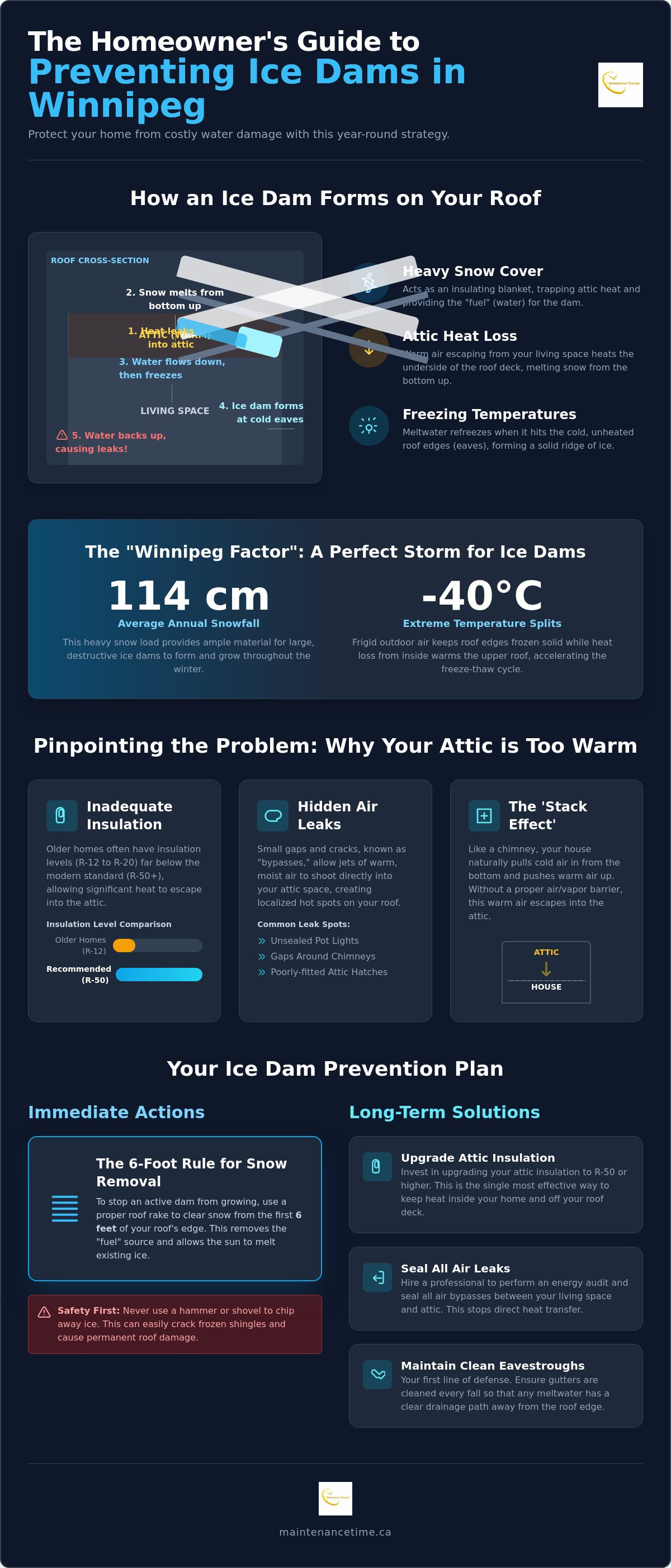
The "Winnipeg Factor" makes our situation unique. We often face -40°C wind chills that keep roof edges freezing cold while internal heat loss warms the peak. This extreme temperature split, combined with heavy Manitoba snowfalls, creates the perfect storm for ice buildup. You can't simply wait for a thaw; the sheer volume of snow on a typical local roof ensures that once a dam starts, it has everything it needs to grow for months.
The Anatomy of a Winnipeg Ice Dam
Three ingredients create the perfect storm: heavy snow cover, heat escaping from your attic, and freezing outdoor temperatures. As heat leaks through your ceiling, it warms the roof deck and melts the bottom layer of snow. This water flows down until it reaches the eaves. The eaves are the coldest part of the roof where ice begins to bond. This "freeze-thaw-freeze" cycle is particularly aggressive in late February and early March when daytime sun melts snow and nighttime temperatures plummet, causing the trapped water to expand and harden.
The Hidden Dangers of Ignoring Ice Buildup
Ignoring a growing dam leads to three major risks. First, the structural weight of several hundred pounds of ice can warp or tear away your eavestroughs entirely. Second, the trapped water behind the dam eventually finds its way under your shingles. This water backs up into wall cavities, ruining insulation and drywall. Finally, there is a serious health risk. Trapped moisture in a warm attic is the primary cause of mould growth, which can compromise your indoor air quality long after the snow melts. Effective ice dam prevention Winnipeg protects your family's health and your home's value.
Identifying the Root Causes of Ice Damming in Manitoba Homes
To master ice dam prevention Winnipeg, you have to look beyond the ice itself and peer into your attic. The primary culprit is usually heat loss. In many of Winnipeg's older neighborhoods, homes were built with insulation standards that don't stand up to modern efficiency needs. While current building codes often suggest R-50 or higher, many local homes still rely on R-12 or R-20 fiberglass batts, or worse, old wood shavings. This thin barrier allows heat from your living space to warm the roof deck. When your roof becomes warmer than the air outside, the snow melts from the bottom up. This creates a "hot attic" scenario where your roof acts like a radiator, fueling the very cycle that creates dams.
Air leaks, or "bypasses," are just as dangerous as thin insulation. These are hidden gaps where warm air escapes directly into the attic. Common spots include unsealed pot lights, gaps around chimney chases, and poorly fitted attic hatches. Even a small opening can dump a significant amount of heat into your attic space. In neighborhoods like Wolseley and River Heights, mature trees add another layer of complexity. Large elms and oaks provide heavy shade. This prevents the sun from naturally warming the eaves during the day. While the peak of your roof is melting snow due to attic heat, the shaded eaves stay frozen solid, accelerating the growth of the ice wall. Keeping your drainage system clear is a vital first step in managing this moisture. A professional gutter cleaning ensures that once the melting starts, the water actually has a place to go instead of pooling behind a ridge of ice.
The Stack Effect: How Your Home Breathes
Warm air is naturally buoyant. It rises through your house and searches for any exit point in the ceiling. This is known as the stack effect. In the bungalows common across Winnipeg from the 1950s through the 1970s, this effect is often pronounced because the vapor barrier is either non-existent or failing. Without a perfectly sealed vapor barrier, moisture-laden air enters the attic, where it condenses, freezes, and contributes to the heat that melts your roof snow. A cold, well-ventilated attic is your best defense against this internal pressure.
Why 1-1/2 Story Homes Are at Higher Risk
If you live in a character home with sloped ceilings in the upstairs bedrooms, you face unique challenges. These 1-1/2 story designs often feature "knee walls," which are short walls that create tiny, triangular attic spaces. These areas are notoriously difficult to insulate and ventilate properly. Because the roof deck is so close to the interior walls, there is often no room for the airflow needed to keep the roof cold. Homeowners in these older areas must be extra vigilant. Regular snow removal from the lower six feet of the roof is often the most practical way to manage the risks created by these architectural limitations.
Proactive Roof Snow Removal: The Best Short-Term Prevention
Snow is the raw material for every ice dam. Without it, the cycle of melting and refreezing that plagues Manitoba homes simply cannot happen. For many local homeowners, ice dam prevention Winnipeg starts with a roof rake. It's the most effective short-term tactic because it removes the "fuel" before attic heat loss has a chance to melt it. By clearing the snow, you break the chain of events that leads to water backing up under your shingles. It's a simple, physical solution to a complex thermal problem.
You don't need to clear your entire roof to see results. In fact, trying to do so can be unnecessary and even risky. We recommend the "6-Foot Rule." This involves clearing the first six feet of snow from the eaves upward. This perimeter is where the roof is coldest and where ice ridges typically anchor. By clearing this buffer zone, you ensure that any meltwater from higher up the roof can flow freely into your gutters. Timing is also critical. Don't wait for a week after a major Winnipeg blizzard to act. Once you see six inches of heavy, wet snow or twelve inches of light powder, it's time to get to work. If you wait until the temperature fluctuates around the freezing mark, that bottom layer of snow will already be turning into solid ice.
Safety must be your top priority. Never use a ladder in icy conditions to clear snow from your roof. Slips on frozen driveways or iced-over siding happen in a split second. Stay on the ground and use tools specifically designed for this task. It's better to leave a little snow than to risk a fall.
How to Safely Clear Roof Snow
- Monitor accumulation: Check your roofline after every major storm to gauge the depth.
- Use a telescoping snow rake: These tools allow you to work from the safety of the ground. Always look up and stay clear of overhead power lines.
- Focus on the eaves: Pull the snow down in small sections, focusing on that critical 3-6 foot area.
- Leave a thin layer: Don't scrape the rake against the shingles. Leave about an inch of snow to protect the asphalt granules from being stripped away.
Professional Snow Removal vs. DIY
There are times when the job is too big for a rake. If you have a steep roof pitch, a two-story home, or if heavy ice has already formed, it's time to call in the experts. Utilizing residential snow removal winnipeg provides peace of mind and keeps you safely on the ground. Professional crews use specialized tools and techniques to remove heavy accumulation without causing shingle damage. This proactive approach is a cornerstone of effective ice dam prevention Winnipeg and ensures your property remains protected throughout the harshest months.
The Role of Eavestroughs and Drainage in Ice Dam Mitigation
Effective ice dam prevention Winnipeg depends on a clear exit strategy for meltwater. While attic heat loss creates the water, your drainage system determines where that water goes. If your gutters are packed with autumn leaves and twigs, they act as a sponge. This organic debris traps moisture, which quickly freezes into a solid block of ice during the first cold snap. Once the trough is full of ice, it provides a sturdy foundation for an ice dam to climb up your roofline. This "gutter-dam" effect accelerates the buildup and forces water under your shingles much faster than a clean roof would.
Many homeowners consider heat cables as a quick fix. In our local climate, cables are often just an expensive band-aid. They create small tunnels through the ice but don't address the underlying insulation or snow accumulation issues. They also consume significant electricity throughout the winter. A more sustainable approach involves ensuring your downspouts are positioned correctly. According to the City of Winnipeg Lot Grading By-law No. 7294/98, you cannot direct water onto neighboring properties, sidewalks, or streets. Proper drainage keeps your foundation safe and prevents ice from forming on public walkways where it creates a liability.
Why Clean Gutters Prevent Ice Build-up
When gutters are clear, meltwater flows directly to the downspouts and away from the house. If they are clogged, the water pools and freezes at the eaves, which are already the coldest part of your roof. This solid ice block then catches more snow and more meltwater, growing larger with every temperature fluctuation. Regular maintenance is the only way to prevent this foundation from forming. For a complete look at how to prepare your system, check out our ultimate eavestrough cleaning winnipeg guide. If you haven't cleared your system since the leaves fell, now is the time to schedule a professional gutter cleaning before the deep freeze sets in.
Long-Term Solutions: Insulation and Rebates
For those looking to end the cycle permanently, upgrading your attic is the best investment. Aiming for an R-value of R-50 or higher significantly reduces the heat transfer that causes melting. This isn't just about adding more fiberglass or cellulose; you must also ensure your attic ventilation is balanced. Proper airflow keeps the roof deck cold by flushing out any heat that does escape. To help with the cost, look into current rebates from Efficiency Manitoba and Manitoba Hydro. These programs often provide financial incentives for homeowners who increase their attic insulation to modern standards. The return on investment comes through lower energy bills and the total elimination of emergency roof repairs; additionally, you can learn more about NanoTech Exteriors to see how professional rejuvenation can further extend the life of your shingles.
Creating a Winter-Ready Property Maintenance Plan
A truly protected home doesn't happen by accident. It's the result of a deliberate, year-round strategy. Adopting a "Maintenance-First" approach means you stop treating your roof as a separate entity and start seeing it as part of a larger property ecosystem. When you prioritize regular upkeep, you create multiple opportunities to catch small issues before they escalate into mid-winter disasters. This proactive mindset is the ultimate form of ice dam prevention Winnipeg homeowners can use to save time and money.
Services like seasonal window cleaning and gutter care do more than just improve your home's appearance. They put professional eyes on your roofline at critical times of the year. A technician cleaning your second-story windows in October might notice a sagging eavestrough or a loose shingle that you can't see from the driveway. Identifying these vulnerabilities in the autumn allows you to fix them while the weather is still mild, rather than fighting a losing battle against a solid block of ice in January. For those in the Pacific Northwest, Snugs Services provides this kind of expert exterior maintenance. Maintenance Time Inc. specializes in this kind of seamless property care, ensuring that your home transitions smoothly between seasonal requirements.
The Essential Fall-to-Winter Transition
Your winter success is built in the fall. Before the first snow flies, review the essential property maintenance checklist to ensure your home is ready for the deep freeze. The most critical step is scheduling your final gutter cleaning for late October or early November, once the last leaves have fallen. During this visit, perform a thorough ground-level inspection of your roofline. Look for any signs of wear that could compromise your home's ability to shed water. This final check ensures your drainage system is clear and functional before the first major accumulation begins. Consistent ice dam prevention Winnipeg starts with these simple, timely actions.
Why Professional Maintenance Saves Money
The financial argument for proactive care is simple. The cost of seasonal maintenance is a fraction of the high price associated with emergency ice steaming and interior water damage repairs. Emergency services are often billed at premium hourly rates with minimum charges, and they only solve the immediate symptom. Contrast this with the value of having a reliable team that knows your property's specific quirks. Proactive scheduling prevents the structural damage and mould growth that follow a major leak. When you work with a partner like Maintenance Time Inc., you're investing in long-term property health rather than paying for a crisis. Request a free quote for your winter property maintenance today and enjoy the peace of mind that comes with professional service.
Take Control of Your Roof This Winter
Winning the battle against winter means acting before the first blizzard hits. You now have a clear roadmap for ice dam prevention Winnipeg, from clearing the snow "fuel" with the 6-foot rule to identifying the hidden air leaks in your attic. Remember that your eavestroughs aren't just for rain; they are the foundation of a dry and safe home during the spring thaw. By prioritizing proactive maintenance, you protect your property's value and your family's comfort throughout the harshest months of the year.
Staying ahead of the weather is easier when you have a dedicated partner. Maintenance Time Inc. has been serving Winnipeg since 2018. As a locally owned and operated business, we understand the unique demands of Manitoba winters. Our comprehensive seasonal maintenance plans are designed to take the stress out of property ownership. We handle the heavy lifting so you can enjoy a leak-free home and total peace of mind.
Don't wait for the first drip to appear on your ceiling. Get Your Winnipeg Property Ready for Winter—Book Maintenance Now. Let's work together to keep your property safe and sound until the grass is green again.
Frequently Asked Questions
How much does it cost to fix ice damming in Winnipeg?
The total cost to address ice dams depends on the severity of the buildup, the height of your roof, and the thickness of the ice ridge. Larger properties with multi-story rooflines often require more specialized equipment and labor. If the ice has already reached the shingles, removal takes longer to ensure no damage occurs. Investing in early ice dam prevention Winnipeg is always more affordable than paying for emergency removal after a leak starts.
Are heat cables effective for preventing ice dams?
Heat cables are a temporary band-aid rather than a permanent solution for your home. While they can melt small drainage channels through existing ice, they don't address the underlying issues of poor insulation or air leaks. They also consume significant electricity and can be unsightly. For long-term peace of mind, it's better to focus on sealing your attic and maintaining a cold roof deck rather than relying on electrical heating; for professional support with residential climate systems, niceandcoolhvac.com offers expert HVAC and heat pump services.
Does home insurance cover ice dam damage in Manitoba?
Most Manitoba home insurance policies cover the resulting interior water damage from a leak, but they rarely pay for the ice dam removal itself. Insurance companies view roof maintenance as the homeowner's responsibility. If you discover a leak, you should document the damage immediately and contact your provider to verify your specific coverage. Preventing the dam through regular snow removal is the best way to avoid a complicated claim process.
Can I use salt or ice melt on my roof?
You should never use standard sidewalk salt or rock salt on your shingles. These chemicals are highly corrosive and will damage your metal gutters, downspouts, and even the nails holding your roof together. Runoff from salt can also kill the grass and plants around your foundation. If you must use a chemical de-icer, choose specialized calcium chloride roof pucks designed specifically for asphalt shingles and use them sparingly.
What is the best R-value for a Winnipeg attic in 2026?
For modern Winnipeg homes, an R-value between R-50 and R-60 is the gold standard for attic insulation. This thickness helps keep your living heat inside the house where it belongs, preventing the roof deck from warming up. When combined with proper ventilation, this level of insulation is a critical component of ice dam prevention Winnipeg. Older homes often have R-20 or less, which is why they are so prone to heavy ice buildup.
How do I know if I have an ice dam or just icicles?
Icicles are often a warning sign of a larger problem, but they aren't the dam itself. An ice dam is the solid ridge of ice that forms at the eaves, often hidden beneath a layer of snow. While icicles are the visible result of melting snow, the dam is the barrier that actually traps water and forces it under your shingles. If you see thick icicles forming only at the gutters, it's time to inspect for a dam.
Why do ice dams only form on one side of my house?
Ice dams often form on specific sections of a roof due to sun exposure and wind patterns. South-facing roof slopes receive more direct sunlight, which causes snow to melt even on cold days, while northern eaves stay frozen. Wind direction also plays a role by creating deep snow drifts on certain sections of the roof. This uneven accumulation provides more "fuel" for dams to form in specific areas while other sides stay clear.
Is it safe to rake snow off my own roof?
It is safe to rake your roof as long as you stay firmly on the ground. You should use a telescoping snow rake with a plastic head to avoid damaging your shingles. Never use a ladder or climb onto a snow-covered roof, as the risk of slipping is extremely high. If you can't reach the snow from the ground or if you have a multi-story home, it's much safer to hire a professional crew to handle the task.


