
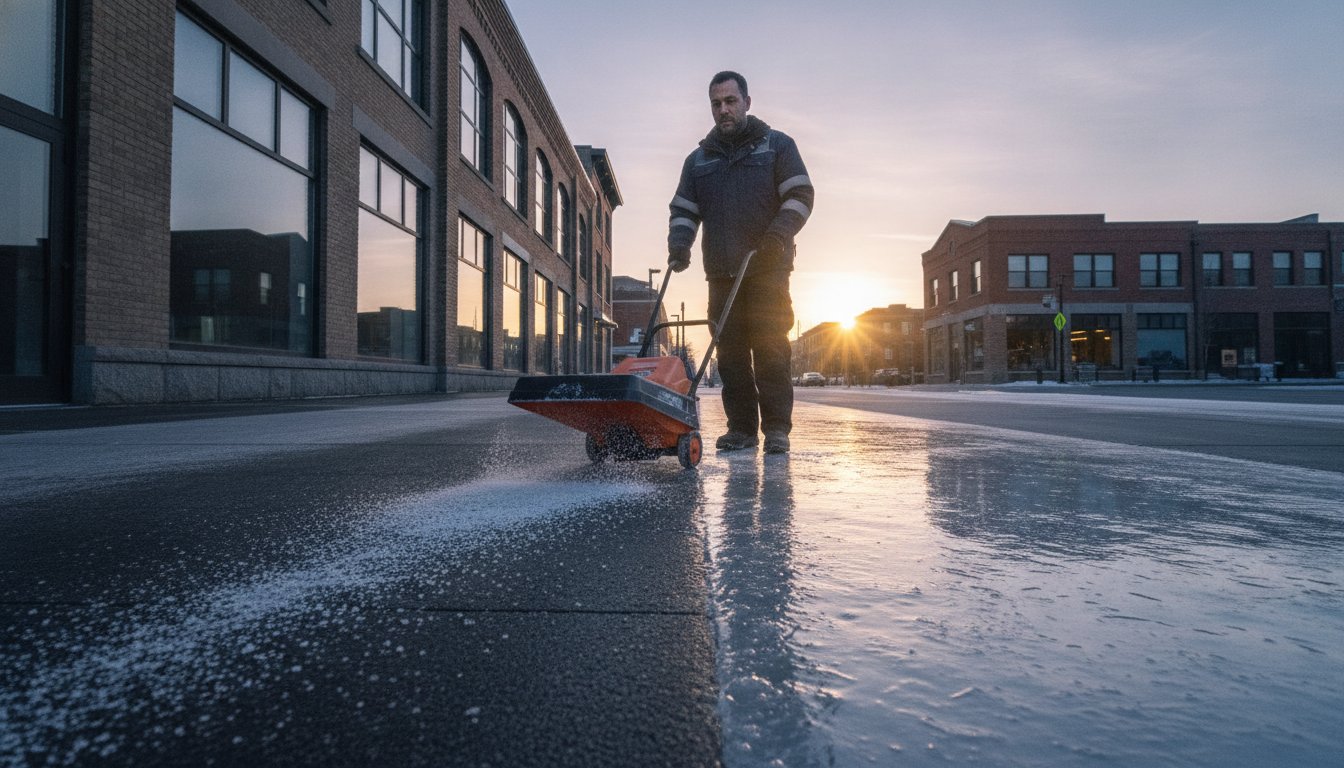
What if the salt you’re spreading on your walkways is actually doing nothing but wasting your maintenance budget? In Winnipeg, standard rock salt often stops working exactly when you need it most. You understand the stress of checking your storefront at 6 a.m. only to find a sheet of ice that puts every customer at risk. It's a heavy burden to carry, especially with local bylaws requiring clear paths within 24 to 48 hours of a snowfall. With an average of 65 to 70 snowfall events each year, relying on professional commercial salting services in Winnipeg is the most effective way to manage these extreme conditions without losing sleep.
This guide will show you how to protect your business from liability and maintain a safe, ice-free property during our harshest winters. We’ll explain why temperature-specific chemistry is essential for effective de-icing and how a consistent management plan reduces your insurance risk. You’ll learn how to ensure your entryways remain clean and accessible for staff and customers alike, regardless of what the forecast says. By the end of this article, you'll have a clear strategy to keep your business running smoothly all winter long.
Key Takeaways
- Learn why commercial salting services Winnipeg are a critical part of your risk management strategy to meet local bylaws and fulfill your duty of care.
- Understand the science behind de-icing and why standard rock salt fails once temperatures drop below -20°C.
- Discover how to choose between granular salting, sanding, and liquid anti-icing to find the most cost-effective solution for your specific property.
- Create a formal winter safety protocol that includes constant weather monitoring to ensure your property is ready before the first customer arrives.
- See how partnering with a local specialist like Maintenance Time Inc provides a frictionless experience that protects your property's value year-round.
Why Commercial Salting Services in Winnipeg are Essential for Risk Management
In Winnipeg, commercial salting is more than just a winter chore. It's a critical proactive safety measure for any Manitoba business. When you manage a commercial property, you have a legal "duty of care" toward everyone who sets foot on your lot. This means you’re responsible for maintaining a safe environment, regardless of how fast the snow falls. Relying on professional commercial salting services Winnipeg ensures that your property remains accessible and safe, even when the weather turns unpredictable. It’s about more than convenience; it’s about protecting your bottom line from the high costs of slip-and-fall insurance claims.
Winnipeg’s weather is famous for its extreme freeze-thaw cycles. These cycles often create "black ice," a transparent and highly dangerous hazard that forms overnight as temperatures drop. Without a professional application of salt or brine, these patches are nearly impossible to spot until it's too late. By the time your first customer arrives, a neglected parking lot can become a significant liability. Consistent salting creates a barrier that prevents ice from bonding to the surface, making it much easier to clear. With an average of 65 to 70 snowfall events each year, having a plan in place is the only way to stay ahead of the storm.
The Legal Reality of Ice-Related Liability
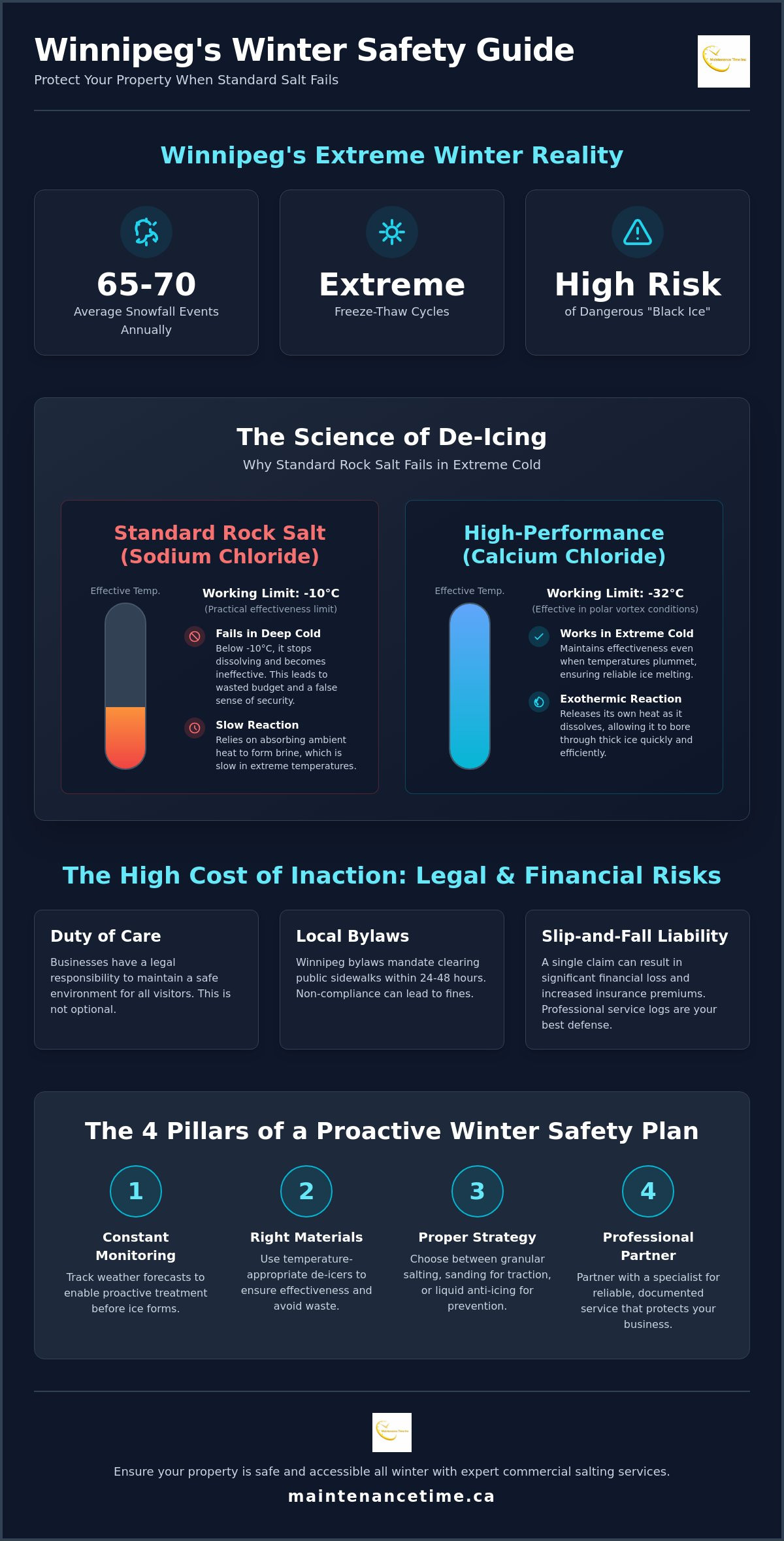
Slip-and-fall liability is the legal obligation a business owner has to compensate an individual for injuries caused by unsafe walking conditions on their property. Provincial law and municipal bylaws, such as the Neighbourhood Liveability Bylaw, require property owners to exercise "reasonable care." In Winnipeg, this often includes clearing public sidewalks adjacent to your business within 36 hours of a snowfall. Courts rarely accept "I didn't know it was icy" as a defense. If a hazard is foreseeable, you're expected to have a plan in place to handle it. Documented visits from a professional provider offer the best proof that you’ve met your legal obligations.
Winnipeg’s Unique Climate Challenges
Our city faces challenges that most other regions never encounter. When the Polar Vortex settles in, standard maintenance routines often fail. Understanding The Science of De-icing is vital because traditional rock salt loses its effectiveness once surface temperatures drop below a certain point. Wind-chill also plays a factor by rapidly cooling asphalt, which leads to the "refreeze" phenomenon. This happens when melting snow from a sunny afternoon turns into a sheet of ice as soon as the sun dips. Professional commercial salting services Winnipeg use specialized products designed to work in our specific climate, ensuring your lot stays clear even when the mercury hits -30°C.
The Science of De-icing: Why Standard Salt Fails at -20°C
Spreading rock salt during a January cold snap is often a total waste of your maintenance budget. Salt works through a process called freezing point depression. To be effective, it must dissolve into a liquid brine to break the bond between ice and asphalt. Standard sodium chloride, or rock salt, has a practical working limit of about -10°C. Once the temperature drops below this point, the chemical reaction stalls. Applying more salt won't help; it just sits on the surface until the wind blows it away. Professional commercial salting services Winnipeg avoid this mistake by matching the de-icing agent to the specific surface temperature of your lot.
When you apply the wrong material at -30°C, you aren't just wasting money. You're creating a false sense of security. Business owners often expect the ice to melt, but instead, the salt remains inert while a fresh layer of frost forms over it. This creates an even more treacherous surface for pedestrians. High-performance additives and treated salts are the only way to combat these extreme Manitoba temperatures. These specialized products are designed to stay active when traditional methods fail, ensuring your entryways stay clear even in the middle of a polar vortex.
Sodium Chloride vs. Calcium Chloride
While sodium chloride is the most common de-icer, it’s rarely enough for a Manitoba winter. Calcium chloride is a superior alternative for businesses that cannot afford to wait for the sun to come out. Unlike rock salt, calcium chloride is exothermic. It releases heat as it dissolves, allowing it to bore through thick ice at temperatures as low as -32°C. Using high-performance agents also helps mitigate the environmental risks of improper salting. When you use a product that actually works, you apply less total material. This prevents excessive runoff from damaging your landscaping or local river systems.
The Importance of Pre-Wetting and Treated Grit
Dry salt is notoriously inefficient in windy conditions. It often bounces off the target area or ends up in the gutter. To prevent this, professional teams use pre-wetting techniques. By treating dry salt with a liquid brine or magnesium chloride solution, the crystals become "tacky" and adhere to the pavement. This ensures the product stays where it’s needed most. During those brutal stretches where the mercury stays below -30°C, we often rely on "hot" salt mixes. These are blends of salt and sand treated with high-performance liquids. The sand provides immediate grit for footing, while the treated salt works to prevent a permanent ice bond. If you want to ensure your lot stays safe regardless of the wind chill, looking into commercial snow removal packages that include these specialized mixes is a smart move.
Choosing the Right De-icing Strategy for Your Property
Every commercial property in Winnipeg has a unique footprint. A small retail storefront on Academy Road requires a different approach than a sprawling distribution center near the airport. While the goal is always safety, the method you choose affects your maintenance budget, your property’s appearance, and the longevity of your infrastructure. Professional commercial salting services Winnipeg offer more than just a person with a bag of salt; they provide a strategic plan that balances traction, melting power, and property protection.
One of the biggest headaches for business owners is "salt tracking." This happens when excessive granular salt is applied to entryways, only to be carried inside on the boots of customers and staff. It ruins carpets and leaves a stubborn white haze on hard flooring. By using precise application rates and choosing the right materials, you can maintain a safe exterior without destroying your interior aesthetic. High-frequency, low-volume applications are often more effective and cleaner than dumping a massive amount of product once a week. This targeted approach keeps your entryways professional and your cleaning costs down.
Granular Salting vs. Liquid Anti-Icing
Liquid anti-icing is a proactive technique where a brine solution is applied to the pavement before a storm hits. This creates a barrier that prevents snow and ice from bonding to the surface. It’s highly efficient and uses significantly less salt, which is better for your landscaping and the local environment. However, liquid isn't always the answer. If the ice has already formed or if the temperature is dropping rapidly, traditional granular salting remains the superior choice for boring through thick accumulation. Knowing how road salt loses effectiveness in the cold is key to deciding when to switch from liquid prevention to granular reaction. A mix of both strategies usually provides the best results for Manitoba businesses.
Protecting Your Infrastructure
Salt is notoriously corrosive. Over time, it can eat away at concrete surfaces, weaken internal rebar, and damage the undercarriages of vehicles in your lot. This is especially true for new concrete, which is more porous and susceptible to "spalling" or surface flaking. To protect these assets, professional commercial salting services Winnipeg use "concrete-safe" de-icers that are less aggressive than standard rock salt. Professional application is the best way to prevent over-salting. By using calibrated equipment, crews ensure that only the necessary amount of product is used. This protects your sidewalks and parking lots from unnecessary chemical wear while keeping your property compliant with safety standards.
How to Develop a Commercial Ice Management Plan
Developing a formal ice management plan is the difference between a safe property and a legal nightmare. A plan isn't just a handshake agreement; it's a living protocol that dictates exactly how your property is handled during every weather event. It starts with setting clear expectations for when and how service occurs. Relying on professional commercial salting services Winnipeg allows you to automate this process so you can focus on running your business. A well-structured plan ensures that your lot is treated before your staff or customers ever arrive.
The most effective plans rely on specific "trigger points" for service. For many Winnipeg businesses, this means an automatic dispatch whenever there is any sign of freezing rain or when snow accumulation reaches 1cm. You shouldn't have to pick up the phone to request service. Instead, your provider should use 24/7 weather monitoring to track pavement temperatures and storm fronts. This proactive approach prevents the ice-to-pavement bond from forming in the first place, which makes clearing much more efficient and less expensive in the long run.
Site Audits and Hazard Identification
A professional plan begins with a thorough site audit before the first frost. You need to identify "low spots" where meltwater naturally pools and freezes into dangerous patches overnight. Clearing drainage paths is essential to prevent ice dams from forming near your main entryways. We also analyze traffic patterns to see where pedestrians actually walk, which is often different from where the sidewalks are located. By identifying these high-risk zones early, we can prioritize them during every application to ensure maximum safety where it's needed most.
Documentation and Reporting
If a slip-and-fall accident occurs, your service log is your most important piece of evidence. Every application must be timestamped and logged to prove you exercised reasonable care. Modern providers use GPS tracking and digital reporting to verify exactly when a crew was on your lot and what materials were applied. A professional salting report should include the time of arrival, the surface temperature, the specific de-icing mix used, and photos of the completed work. This level of detail provides a "paper shield" that protects your business from fraudulent or inflated liability claims.
Ready to build a custom safety protocol for your property? Contact Maintenance Time Inc today to discuss our commercial snow removal and salting plans tailored for Winnipeg’s unique winter demands.
Maintenance Time Inc: Reliable Commercial Salting in Winnipeg
Maintenance Time Inc stands as a local specialist dedicated to the specific needs of Manitoba businesses. We understand that property management is a year-round commitment. Our team takes pride in offering a frictionless experience that removes the stress of winter maintenance from your daily schedule. By choosing our commercial salting services Winnipeg, you’re partnering with a crew that values long-term relationships over quick transactions. We treat every parking lot and sidewalk as if it were our own, ensuring professional standards are met every single time the snow falls.
Reliability is our hallmark. We don't just wait for you to call; we monitor the weather 24/7 to ensure your site is treated before hazards develop. Our salting applications are fully integrated with our comprehensive snow removal services. This means we don't just push snow to the edges of your lot. We address the dangerous ice layers that form beneath, providing a complete safety solution. Whether you manage a small retail shop or a large commercial plaza, our equipment and expertise are ready to handle the scale of your property.
Why Local Expertise Matters
Being based right here in Winnipeg gives us a distinct advantage. We can respond faster to sudden weather shifts than out-of-province contractors. Our team is deeply familiar with Manitoba’s specific winter regulations, including the municipal deadlines for clearing public sidewalks. We take a "trusted neighbor" approach to our work. We know which areas of the city are prone to heavier drifts and which surface types require specialized de-icing agents. This local knowledge ensures that your business stays compliant with bylaws while keeping your staff and customers safe.
Get Started with a Winter Safety Assessment
The best time to prepare for winter is before the first frost hits the ground. We encourage business owners to book a comprehensive site audit early in the season. This allows us to identify potential hazards and map out your property’s traffic patterns before they are covered in snow. Transitioning between our seasonal services is simple and seamless. We can handle your lawn care and lawn mowing in the summer and shift directly into snow removal and salting when the seasons change. This year-round commitment helps maintain your property’s value and curb appeal without any gaps in service.
Ready to secure your property for the upcoming season? Contact Maintenance Time Inc for a commercial salting quote and experience the peace of mind that comes with professional property care.
Secure Your Property for a Safe Winnipeg Winter
Managing a commercial property in Manitoba doesn't have to be a source of constant stress. By moving from reactive shoveling to a proactive ice management plan, you protect your business from legal risks and keep your entryways safe for everyone. You now understand that the right chemistry is essential when temperatures drop below -20°C and that detailed service logs are your best defense against liability claims. Professional commercial salting services Winnipeg provide the technical expertise and 24/7 monitoring required to handle our city's most extreme weather events.
Maintenance Time Inc was founded in 2018 with deep Winnipeg roots. We specialize in commercial property maintenance and use specialized equipment to ensure your lot remains clear and compliant. Our team is dedicated to providing a frictionless experience that lets you focus on your customers while we handle the ice. Don't let the next freeze-thaw cycle catch you off guard or put your business at risk. Take control of your property's safety today by partnering with a local team that understands the demands of a prairie winter. Request a Commercial Salting & Snow Removal Quote and enjoy the confidence of a safe, accessible property all season long.
Frequently Asked Questions
How often should a commercial parking lot be salted in Winnipeg?
Salting frequency depends entirely on the weather and surface conditions. Most properties require treatment after every snowfall or whenever a freeze-thaw cycle creates black ice. Since Winnipeg averages 65 to 70 snowfall events annually, a consistent schedule is necessary to remain compliant with the clearing deadlines set by local bylaws. Professional monitoring ensures your lot is treated as soon as the temperature drops or moisture accumulates.
What is the best salt to use when the temperature is below -20°C?
Calcium chloride is the most effective choice for extreme Manitoba cold. While standard rock salt stops working around -10°C, calcium chloride continues to melt ice at temperatures as low as -32°C. Using high-performance commercial salting services Winnipeg ensures the right product is matched to the current forecast. This prevents wasted resources and ensures your entryways stay clear even during a polar vortex.
Can salt damage my commercial building’s concrete sidewalks?
Yes, standard rock salt can cause surface flaking or spalling on concrete. This is particularly true for newer sidewalks that are more porous and haven't fully cured. Professional crews use concrete-safe de-icers and calibrated spreaders to prevent over-application. This targeted approach protects your property's infrastructure while maintaining the safety standards required for your business.
Do I need salting services if I already have a snow plowing contract?
Yes, because plowing only removes the bulk of the snow. It doesn't address the thin, slippery layer of ice bonded to the pavement. Salting is a necessary second step to ensure the surface is safe for pedestrians and vehicles after the heavy equipment has finished its work. It also prevents any remaining snow from refreezing into a dangerous sheet of ice overnight.
How does professional salting help with slip-and-fall liability?
Professional salting provides a vital layer of documentation for your business. Every visit is timestamped and logged, showing that you took proactive steps to maintain a safe environment. This evidence is critical for proving you met your "duty of care" if a liability claim ever arises. It's a proactive way to manage risk and protect your insurance premiums from rising due to avoidable accidents.
What is the difference between sanding and salting for commercial properties?
Salt is designed to melt ice by lowering its freezing point, while sand is used solely for traction. Sand doesn't melt anything, but it provides immediate grip on surfaces where the temperature is too low for chemical de-icers to work quickly. Many properties benefit from a "hot" mix that combines both materials to provide immediate traction and long-term melting power.
How quickly can a salting crew respond to an ice storm in Winnipeg?
Our crews use 24/7 weather monitoring to stay ahead of the storm. Instead of waiting for a call, we're often on-site as the ice begins to form or immediately after a snowfall ends. This rapid response is a core benefit of hiring local commercial salting services Winnipeg. We prioritize speed and reliability to ensure your property is ready before your first customer arrives.
Is liquid de-icing better than granular salt for Winnipeg businesses?
Liquid de-icing is superior for anti-icing, which means preventing ice from bonding to the pavement when applied before a storm. It uses less material and is better for the environment. However, granular salt is more effective for boring through existing thick ice or heavy packed snow. A comprehensive ice management plan often uses a combination of both methods to achieve the best results.


